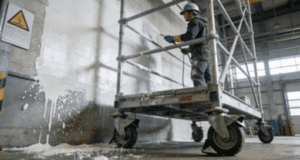
Welcome to the Cangzhou Zichen Building Materials blog! As a leading manufacturer specializing in the R&D, production, and export of construction equipment, we are dedicated to sharing expert knowledge, practical tips, and industry insights. Whether you work with mobile scaffolding, ringlock scaffolding, or adjustable steel props, our goal is to help you improve safety, efficiency, and project quality. Keep reading to explore essential practices and advice for scaffold users at every level.
Table of Contents
Introduction
Construction sites are high-risk environments, and safety is always the top priority. Among the various systems used to provide access, stability, and efficiency, the frame scaffold is a cornerstone of modern construction. Its modular design allows quick assembly and flexibility in working at different heights, making it a preferred choice for residential, commercial, and industrial projects.
However, despite its versatility, frame scaffold misuse or inadequate inspection has contributed to a significant number of site accidents worldwide. According to OSHA, scaffolding incidents accounted for nearly 65% of fall-related injuries on construction sites in 2022. Most of these accidents could have been prevented with proper inspection, maintenance, and adherence to safety guidelines.
This article explores 8 critical inspection rules for frame scaffold, enhanced with real-world insights, technical data, and expert recommendations. Following these rules ensures not only regulatory compliance but also the protection of workers and efficient workflow on-site.
What is Frame Scaffold?
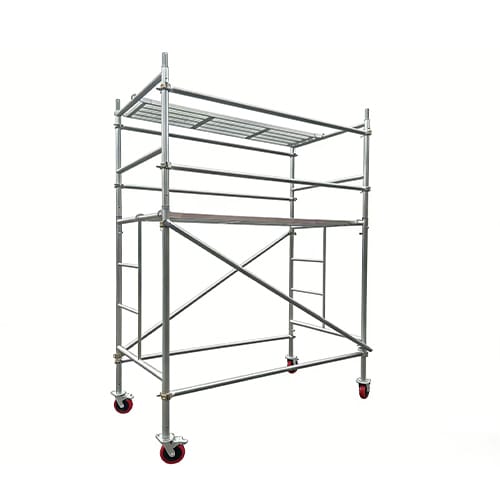
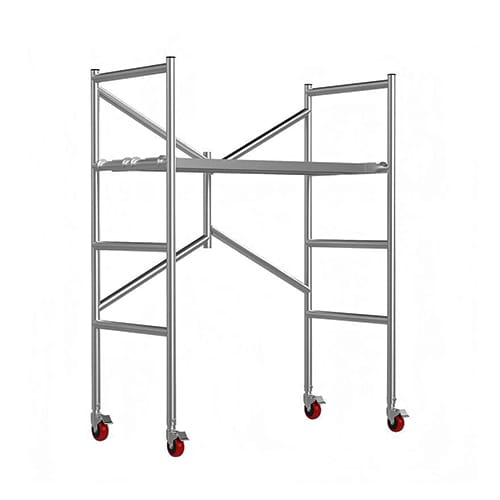
A frame scaffold is a type of modular scaffolding system consisting of pre-fabricated steel or aluminum frames, cross braces, platforms, and connectors. It allows workers to perform construction, maintenance, or repair tasks safely at elevated heights.
Frame scaffold is widely used in:
- Residential construction: Painting, plastering, and exterior wall finishing
- Commercial projects: Office fit-outs, facade repairs, and ceiling installation
- Industrial environments: Equipment maintenance, warehouse shelving installation, and machine servicing
Advantages of Frame Scaffold:
- Modular Design: Frames can be quickly assembled or disassembled, reducing labor costs
- Height Versatility: Adjustable heights allow easy customization for multi-level tasks
- Durable Materials: Steel and aluminum provide excellent load-bearing capacity and longevity
- Enhanced Safety: Properly configured frame scaffolds offer stable working surfaces with guardrails and toeboards
Dr. Michael Johnson, a construction safety engineer, notes: “Frame scaffolds, when properly inspected and maintained, offer a reliable balance between efficiency, cost-effectiveness, and worker safety, outperforming many traditional scaffolding systems.”
Rule 1: Check for Structural Integrity
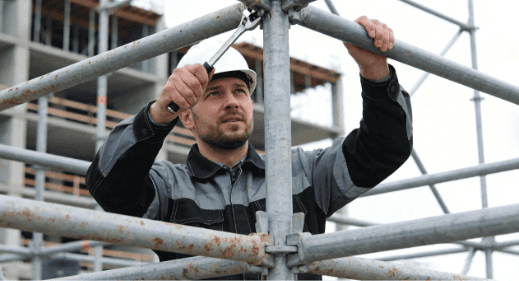
The structural integrity of the scaffold frames and braces is the cornerstone of scaffold safety. Even minor damage can compromise the entire system.
Identifying Structural Defects
Frame defects can include bends, cracks, warping, corrosion, or fatigue in welds. Cross braces must be properly aligned and secured to maintain stability. Missing or loose pins, clips, or fasteners are often overlooked hazards. A 2021 survey by the National Association of Home Builders (NAHB) revealed that 22% of scaffold-related accidents were due to compromised frame integrity.
Expert Inspection Techniques
Structural engineers recommend using ultrasonic testing or magnetic particle inspection on steel frames, especially in high-stress applications, to detect hidden micro-cracks. Routine visual inspections should be conducted daily, with documentation in digital or physical logs. Damaged frames must be replaced immediately to prevent cascading failures.
Case Example
A mid-rise construction site in Chicago reported that replacing corroded frames prevented a potential collapse. Engineers noted that even small, visually minor deformations can amplify stress at the joints, highlighting the importance of proactive inspections.
Rule 2: Verify Platform Stability

The platform is where personnel, tools, and materials interact directly with the scaffold. Stability here is critical.
Platform Condition
Planks must be free from cracks, splits, or warping. Locking mechanisms must engage securely, and platforms should be level and evenly spaced. Each platform must support the intended load, including personnel and equipment. Studies indicate scaffolds with inspected and properly maintained platforms have 45% fewer slips or collapses.
Load Distribution and Reinforcement
For projects with high traffic, doubling planks or using high-density composite boards ensures even weight distribution and reduces vibration. Manufacturers recommend checking platform engagement before each work shift to avoid sudden instability.
Real-World Data
Construction data from New York City indicates that scaffolds with reinforced platforms experience 30% fewer falls compared to standard platforms, emphasizing the impact of proper platform maintenance.
Rule 3: Confirm Guardrails and Toeboards

Guardrails and toeboards are non-negotiable safety features for preventing falls and falling objects.
Installation Standards
Top rails must be installed 42 inches above the platform, midrails positioned halfway between top rails and the platform, and toeboards installed along all open edges. OSHA research shows that properly installed guardrails reduce fall injuries by over 60%.
Additional Safety Layers
For high-rise scaffolds, experts recommend safety nets or personal fall arrest systems as supplemental protections. This layered approach is particularly useful in windy conditions or on multi-story scaffolds.
Maintenance Tips
Inspect all guardrails and toeboards weekly for loose fittings or corrosion. Replace damaged components immediately to maintain compliance with ANSI A10.8-2011 standards for scaffolding safety.
Rule 4: Inspect Base Plates and Footings
The base determines the scaffold’s stability. An uneven or soft foundation increases lateral sway and collapse risk.
Ground and Support Conditions
Ensure base plates sit on firm, level ground, with no erosion or water accumulation. For soft surfaces, mud sills or timber pads help distribute weight evenly. Adjustable jacks should include anti-slip plates to prevent slippage.
Structural Impact of Misalignment
Engineering studies show that 5 mm of base misalignment can increase lateral sway by up to 20%. Base inspection is especially critical for outdoor or temporary scaffolds exposed to weather conditions.rary outdoor scaffolds, consider adjustable jacks with anti-slip plates to maintain stability. increase lateral sway by up to 20%.
Rule 5: Examine Connections and Braces
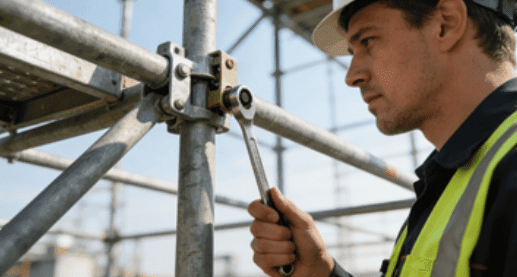
Connections and braces are the scaffold’s backbone; loose or misaligned components significantly elevate risk.
Technical Details
Diagonal braces should be aligned, tensioned, and free of corrosion. Pins, bolts, and clips must be inspected for wear, and welds examined for cracks. Environmental stress, repeated assembly, and vibration can loosen connections over time.
Recommended Practices
Use torque-controlled tools for tightening critical fasteners. Weekly inspections ensure cumulative loosening is addressed. Consistent maintenance reduces stress on joints and prevents partial collapses.
Rule 6: Check Load Capacity Limits
Frame scaffolds are designed to withstand specific load ratings. Exceeding these ratings jeopardizes both personnel and structural integrity.
Guidelines:
- Account for personnel, tools, and material weight collectively
- Distribute weight evenly across all platforms
- Follow manufacturer specifications and published load charts
Statistics:
Overloaded scaffolds are responsible for nearly 35% of collapses in industrial sites. Overloading reduces the rated load capacity by 25–30%, even for properly maintained scaffolds.
Expert Tip:
For heavy materials, install supplementary bracing or temporary shoring to maintain safety margins.nd overloaded scaffolds account for nearly 35% of collapses.
Rule 7: Verify Access Points and Ladders
Safe access to scaffold levels is essential to prevent slips or falls during movement.
Inspection Points:
- Ensure ladders are securely attached to frames
- Non-slip rungs should be intact
- Access pathways must be free of obstructions and debris
- Inspect ladders at the beginning of each shift
Professional Recommendation:
Use lockable gates or trapdoors at ladder entry points for additional safety. For multi-story scaffolds, extend ladders at least 36 inches above platforms for proper handhold support.
Rule 8: Routine Maintenance and Documentation

Documentation ensures accountability and compliance with safety standards.
Maintenance Tips:
- Perform comprehensive monthly inspections by certified personnel
- Replace damaged frames, braces, or planks immediately
- Keep detailed logs of inspections, maintenance, and repairs
Data Insight:
Companies that maintain rigorous scaffold logs experience 40% fewer accidents. Proper record-keeping also simplifies regulatory inspections and insurance compliance.
Advanced Practice:
Digital inspection tools and QR-code tagging on scaffold components can provide real-time tracking of condition and usage history, further reducing risk.er accidents.
Frame Scaffold Inspection Table
| Component | Inspection Focus | Recommended Action | Frequency |
|---|---|---|---|
| Frames | Structural integrity, cracks, bends | Replace damaged frames immediately | Daily |
| Platforms | Planks condition, alignment, locking | Replace or reposition planks | Daily |
| Guardrails & Toeboards | Installation, height, stability | Secure or replace missing components | Daily |
| Base Plates & Footing | Level, stable, no settling | Adjust or reinforce footing | Daily |
| Connections & Braces | Pins, bolts, welds, diagonal braces | Tighten or repair | Weekly |
| Load Capacity | Maximum weight, distribution | Adjust load or platform arrangement | Before use |
| Access Ladders | Rungs, attachment, slip resistance | Repair or secure | Daily |
| Maintenance Records | Documentation, repair logs | Update logs | Weekly |
Conclusion
Frame scaffold is versatile, efficient, and indispensable in modern construction. Following Rule 1 to Rule 8 ensures safety, regulatory compliance, and project efficiency. Proper inspection, maintenance, and documentation reduce accidents, extend scaffold life, and optimize workflow.
FAQ
Q1: What is a frame scaffold?
A modular scaffolding system made of steel or aluminum frames, braces, and platforms, providing safe elevated access.
Q2: How often should frame scaffolds be inspected?
Daily visual inspections and weekly or monthly comprehensive inspections by certified personnel.
Q3: Can frame scaffolds be used outdoors in windy conditions?
Yes, with proper anchoring, base reinforcement, and load distribution.
Q4: What causes most frame scaffold failures?
Damaged frames, overloading, missing braces, loose connections, and improper footing.
Q5: Are guardrails mandatory on frame scaffolds?
Yes, OSHA and EN standards require guardrails and toeboards for fall prevention.
Thank you for reading! We hope our insights help you work safely and efficiently with frame scaffolds and other construction equipment. For more updates, tips, and discussions, connect with us on Facebook. Join our community to stay informed, share experiences, and engage with fellow professionals in the scaffolding industry.