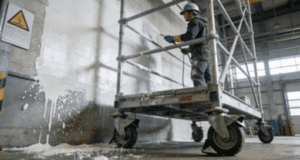
Welcome to the Cangzhou Zichen Building Materials blog! As a leading manufacturer specializing in the R&D, production, and export of construction equipment, we are dedicated to sharing expert knowledge, practical tips, and industry insights. Whether you work with mobile scaffolding, ringlock scaffolding, or adjustable steel props, our goal is to help you improve safety, efficiency, and project quality. Keep reading to explore essential practices and advice for scaffold users at every level.
Table of Contents
Key Takeaways for This Blog
- Essential scaffolding tools for construction site safety
- Types, specifications, and materials of scaffolding tools
- Safety compliance and international standards for scaffolding equipment
- Maintenance, inspection, and longevity strategies
- Comparative analysis of scaffolding tools types, materials, and load capacities
- Real-world case studies demonstrating productivity and safety improvements
- Emerging trends and innovations in scaffolding tools
- Environmental and economic considerations
- FAQ addressing contractors’ and workers’ common questions
Introduction
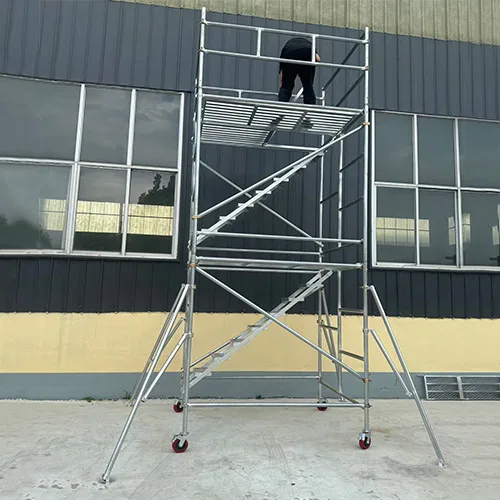
Construction sites are inherently hazardous, with workers exposed to risks from height, heavy loads, and environmental conditions. Among the most critical safety measures are properly selected scaffolding tools, which ensure structural stability, facilitate efficient work, and protect personnel.
According to OSHA (Occupational Safety and Health Administration, 2023), scaffolding accidents account for over 65% of construction site falls, emphasizing the importance of reliable tools. Modern urban projects, high-rise developments, and industrial maintenance require scaffolding that can support heavy loads, withstand environmental exposure, and comply with ISO and OSHA safety standards. Investing in the right scaffolding tools improves productivity, reduces downtime, and minimizes accident liability. A 2024 white paper from the International Construction Equipment Association (ICEA) reports that using high-quality scaffolding tools can reduce site accidents by up to 40% while increasing assembly efficiency by 25%.
Advantages of Using Proper Scaffolding Tools
Enhanced Site Safety
Scaffolding tools provide secure platforms and load-bearing stability, preventing accidents from falls, tip-overs, or structural collapse. Tools like adjustable base jacks, stabilizers, and guardrails reduce worker risk significantly.
Efficiency and Productivity
Time spent on setup and adjustments can be minimized with modular scaffolding components and ergonomic tools. Adjustable scaffolding tools reduce assembly errors, speeding up large-scale construction projects.
Longevity and Durability
High-quality scaffolding tools made from galvanized steel, aluminum alloys, or fiber-reinforced composites resist corrosion and mechanical stress, ensuring decades of reliable service.
Compliance with Safety Standards
Modern scaffolding tools comply with OSHA 1926 Subpart L (Construction Scaffolds regulations), EN 12811 (Performance requirements for access and working scaffolds), and ISO 9001 & ISO 14001 (Quality and environmental management for manufacturing).
Types of Scaffolding Tools
Assembly Tools
Adjustable Base Jacks
Provide a stable foundation on uneven terrain. Vertical adjustment up to 600 mm; supports load capacities up to 10,000 kg per leg; essential for high-rise and outdoor projects.
Couplers and Clamps
Connect scaffolding tubes to create rigid structures. Swivel couplers allow flexible angles up to 360°, rigid couplers maintain horizontal and vertical stability, must be rated for dynamic and static load tests.
Safety Accessories
Guard Rails and Toe Boards
Protect workers and materials. OSHA recommends guardrails at heights above 2 meters, toe boards prevent accidental dropping of tools and debris, anti-slip materials increase safety in wet conditions.
Stabilizers and Outriggers
Provide lateral stability for tall scaffolds. Adjustable outriggers extend the base footprint, reduce sway during high-wind conditions, required for scaffolds exceeding 10 m in height.
Platform Tools
Scaffold Planks
Platforms for worker mobility and material storage. Aluminum planks weigh 30% less than steel equivalents, anti-slip surfaces reduce slip incidents by up to 50%, can bear loads up to 500 kg/m².
Ladder Attachments
Safe vertical access between scaffold levels. Locking brackets prevent accidental dislodging, compliance with EN 131 ladder safety standards, essential for confined spaces and multi-level scaffolding.
Material and Design Considerations for Scaffolding Tools

Steel vs Aluminum
| Tool Category | Material | Weight | Load Capacity | Durability | Typical Application |
|---|---|---|---|---|---|
| Base Jacks | Steel/Aluminum | Medium-Heavy | 8,000–10,000 kg | High | Outdoor uneven terrain, high-rise scaffolds |
| Couplers & Clamps | Steel | Light-Medium | 5,000–8,000 kg | Very High | Scaffold connections, angled setups |
| Planks | Aluminum/Steel | Light-Medium | 300–500 kg/m² | High | Platforms, pedestrian and worker access |
| Outriggers | Steel | Heavy | 8,000–10,000 kg | Very High | Stability for tall scaffolds |
| Ladders & Attachments | Aluminum | Light | 150–300 kg | High | Multi-level scaffolding access |
Observation: Steel tools are optimal for heavy-duty, high-load scaffolding. Aluminum tools are suitable for mobility, rapid deployment, and lighter loads.
Fiber-Reinforced Composites
Lightweight yet strong, corrosion-resistant and fire-retardant, increasingly used in offshore and chemical plant scaffolding.
Anti-Corrosion Coatings
Hot-dip galvanization extends service life up to 30 years, powder-coated aluminum prevents oxidation in outdoor environments, ISO 1461 certified coatings guarantee uniform protection.
Maintenance and Inspection of Scaffolding Tools
Routine Inspections
Weekly visual checks for cracks, rust, or deformation, ensure couplers, clamps, and jacks operate smoothly, post-storm or post-traffic inspection is mandatory for outdoor scaffolding.
Cleaning and Lubrication
Remove dust, mud, and cement residues, lubricate threads, hinges, and moving parts to prevent wear.
Replacement Guidelines
Replace damaged or worn tools immediately, track service life and load cycles using site logs, maintain ISO-compliant records for legal and insurance purposes.
Comparative Analysis: Scaffolding Tools Types
| Tool Category | Strength | Portability | Safety Features | Best Use Case |
|---|---|---|---|---|
| Base Jacks | High | Medium | Adjustable height, anti-slip | Uneven terrain, high-rise scaffolds |
| Couplers & Clamps | High | Medium | Locking, rigid/stable | Structural connections |
| Planks | Medium | High | Anti-slip surface | Worker platforms, pedestrian paths |
| Outriggers | Very High | Low | Adjustable spread | Tall scaffolds, wind-prone areas |
| Ladders & Attachments | Medium | High | Locking brackets, compliant | Vertical access, confined spaces |
Observation: Matching scaffolding tools to the site type, load, and safety requirements ensures both operational efficiency and worker protection.
Real-World Case Studies
Urban Construction in New York
Problem: Multi-level scaffold on uneven terrain. Solution: Adjustable base jacks with modular planks. Result: 30% reduction in setup time, zero fall incidents.
Industrial Maintenance in Germany
Problem: Heavy machinery installation on scaffolding. Solution: Steel scaffolding tools with outriggers and guardrails. Result: Improved stability, no accidents over 12 months.
Offshore Oil Platform in Norway
Problem: Corrosive marine environment. Solution: Fiber-reinforced composite scaffolding tools. Result: 20% lighter, easier transport, zero corrosion after 5 years.
Emerging Trends and Innovations

Modular Scaffolding Systems
Tool-less assembly, interlocking components, reduced labor and assembly time by up to 40%, adaptable for various building shapes.
Smart and IoT-Enabled Tools
Sensors monitor load and tilt, alerts sent via mobile devices for unsafe conditions, useful for high-rise and industrial applications.
Lightweight Composites
Fiber-reinforced polymers reduce weight by 35–40%, high tensile strength and chemical resistance, ideal for rapid deployment in urban and offshore projects.
Environmental and Economic Considerations
Sustainable Practices
Recyclable steel and aluminum reduce landfill waste, eco-friendly coatings minimize chemical runoff.
Long-Term Cost Benefits
Durable scaffolding tools reduce replacement frequency, high-quality tools lower injury-related downtime costs, ROI maximized in multi-year, high-volume projects.
Conclusion
Investing in high-quality scaffolding tools is critical for modern construction projects of any scale. Proper tools not only ensure the safety of workers but also enhance efficiency, reduce assembly time, and minimize operational risks. By choosing scaffolding tools that comply with international safety standards such as OSHA, EN 12811, and ISO certifications, contractors can guarantee both legal compliance and on-site protection.
Selecting the right material is equally important. Steel scaffolding tools provide maximum strength and load capacity for heavy-duty projects, while aluminum and fiber-reinforced composites offer lightweight alternatives suitable for mobile, temporary, or high-rise applications. Incorporating modular systems and IoT-enabled monitoring further enhances safety and allows supervisors to respond proactively to potential hazards.
Regular maintenance, inspection, and timely replacement of worn or damaged tools prolong service life and reduce downtime. In addition, sustainable practices such as using recyclable materials and eco-friendly coatings not only contribute to environmental responsibility but also reduce long-term costs for construction companies.
Ultimately, high-quality scaffolding tools provide a solid foundation—both literally and figuratively—for successful construction projects. By investing in the right combination of tools, materials, and safety systems, construction managers can achieve safer worksites, higher productivity, and a better return on investment, ensuring projects are completed efficiently, on schedule, and with minimal risk to personnel.
FAQ
Which scaffolding tools are essential for beginners?
Adjustable base jacks, planks, guardrails, ladders, and couplers ensure both safety and usability.
How often should scaffolding tools be inspected?
Weekly inspections plus post-extreme weather checks are recommended.
Can aluminum scaffolding tools handle heavy loads?
Yes, within rated capacity, but steel is preferred for extreme load scenarios.
Are modular scaffolding tools faster to assemble than traditional ones?
Yes, modular designs reduce setup time by up to 40% and minimize assembly errors.
What features make scaffolding tools suitable for high-rise construction?
Prioritize load-bearing capacity, outriggers, anti-slip surfaces, and premium corrosion-resistant materials.
How do modern IoT scaffolding tools enhance safety?
Smart sensors track tilt, load, and movement, alerting workers and supervisors to unsafe conditions.
Thank you for reading! We hope our insights help you work safely and efficiently with frame scaffolds and other construction equipment. For more updates, tips, and discussions, connect with us on Facebook. Join our community to stay informed, share experiences, and engage with fellow professionals in the scaffolding industry.