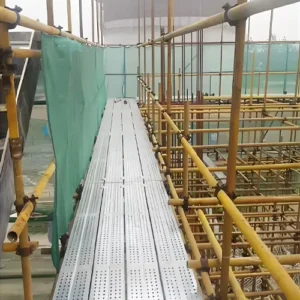
Welcome to the Cangzhou Zichen Building Materials blog! As a leading manufacturer specializing in the R&D, production, and export of construction equipment, we are dedicated to sharing expert knowledge, practical tips, and industry insights. Whether you work with mobile scaffolding, ringlock scaffolding, or adjustable steel props, our goal is to help you improve safety, efficiency, and project quality. Keep reading to explore essential practices and advice for scaffold users at every level.
Table of Contents
Introduction
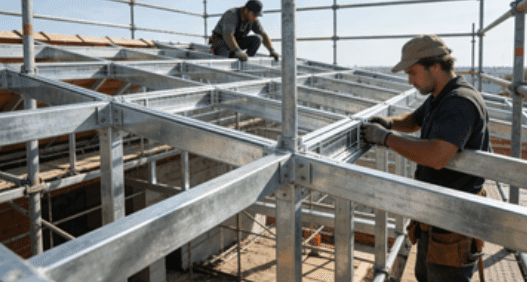
Roof scaffolding is a critical component in construction, renovation, and maintenance projects. It provides safe access to elevated work areas, supporting workers, tools, and materials. In 2026, the focus on roof scaffolding extends beyond safety: modern systems emphasize efficiency, modularity, and compliance with updated construction standards. Proper installation and use reduce accidents, improve workflow, and ensure projects stay on schedule.
Across regions like North America, Europe, and Asia, contractors are increasingly adopting roof scaffolding systems that combine lightweight materials with enhanced durability. Residential, commercial, and high-rise projects all benefit from customized scaffolding solutions that address environmental conditions, project scale, and regulatory requirements.
Types of Roof Scaffolding
Frame Scaffold Systems
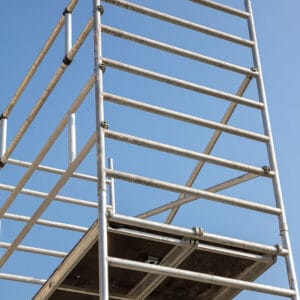
Frame scaffold systems are popular for residential and commercial applications due to their simplicity and versatility. They consist of pre-fabricated frames, cross braces, and platforms that can be quickly assembled and adjusted. In 2026, aluminum frames are widely preferred for their lightweight design, making transport and installation easier, while steel frames are chosen for heavy-duty projects requiring high load-bearing capacity.
- Applications: Low-rise buildings, home renovations, small commercial sites
- Regional Use: North America favors lightweight aluminum frames for ease of transport; European projects often use steel for multi-story renovations.
Suspended Roof Scaffolding
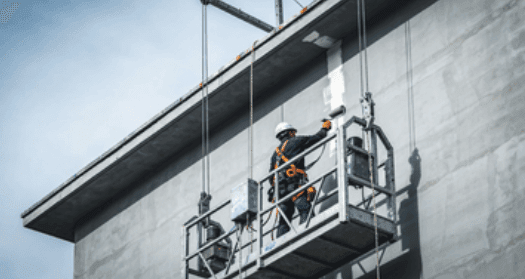
Suspended scaffolding is essential for projects where ground access is limited, such as high-rise buildings or steep roofs. These scaffolds hang from anchor points on the roof and allow workers to reach facades safely. Advanced suspended systems in 2026 include automatic locking mechanisms, reinforced ropes, and integrated guardrails.
- Applications: High-rise construction, facade maintenance, painting, window installation
- Regional Use: Urban areas with tall buildings, like New York, Dubai, and Shanghai, increasingly rely on suspended scaffolds for safety and accessibility.
Mobile Roof Scaffolding
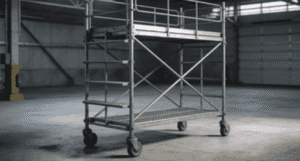
Mobile scaffolding systems are mounted on lockable wheels, making them ideal for projects requiring frequent repositioning. Modern mobile roof scaffolding integrates adjustable height, stabilizers, and non-slip platforms.
- Applications: Indoor projects, low-rise roof repairs, temporary access for contractors
- Regional Use: Widely used in European and Asian urban renovations where mobility is essential.
Modular Roof Scaffolding Systems
Modular systems offer flexibility and rapid assembly, with interchangeable components that allow for custom configurations. They are increasingly popular in 2026 due to their adaptability across multiple project types.
- Applications: Large-scale commercial projects, modular construction, public infrastructure
- Regional Use: Prefabricated modular scaffolding is common in Scandinavian countries and Japan, where efficiency and safety are highly regulated.
Preparation for Roof Scaffolding Installation
Site Assessment and Risk Analysis
Before installation, evaluate the project site for hazards, ground stability, overhead obstructions, and weather conditions. High-wind areas, uneven surfaces, or congested urban sites require specialized scaffolding setups. For example, in Tokyo or Hong Kong, limited rooftop space necessitates compact, modular scaffolding systems.
Material and Equipment Selection
Selecting the right material is crucial for durability and safety. Options include:
- Aluminum: Lightweight, corrosion-resistant, portable
- Steel: High strength, ideal for heavy-duty scaffolding
- Composite Materials: Increasingly used for UV resistance and low maintenance
Additional equipment includes guardrails, toe boards, stabilizers, ladders, and safety harnesses. In 2026, many manufacturers integrate smart components, such as anti-slip platforms and reinforced locking mechanisms.
Workforce Training
Training ensures that workers understand assembly, safety protocols, and emergency procedures. Comprehensive training reduces accidents and increases efficiency. Projects in North America, Europe, and Australia now often require formal scaffolding certification before workers can operate or install roof scaffolding.
Step-by-Step Roof Scaffolding Installation
Proper installation of roof scaffolding is crucial for safety, efficiency, and compliance with industry standards. Each step must be carefully executed to prevent accidents, protect workers, and ensure the structure remains stable under load. In 2026, modern scaffolding systems are modular, lightweight, and come with enhanced safety features, but meticulous attention to detail during installation remains essential.
Step 1: Base Preparation
The foundation of any roof scaffolding system is the most critical element for safety and stability. Before assembly:
- Assess the surface: Check whether the ground or roof area is level, solid, and free from debris. Uneven surfaces can compromise scaffold stability and lead to tipping or collapse.
- Use leveling equipment: Employ spirit levels or laser levels to ensure an even base. For slightly uneven surfaces, adjustable base plates, screw jacks, or scaffolding mats can compensate for irregularities.
- Check load-bearing capacity: Confirm that the roof or ground can support the scaffolding weight plus workers and materials. Concrete pads or reinforced mats may be necessary for soft soil or rooftop membranes.
- Environmental considerations: For regions prone to snow, heavy rain, or shifting soil, reinforced base plates or weighted stabilizers prevent movement and sinking. Windy areas may require additional anchoring or tie-downs at the base.
- Safety tip: Always mark the installation perimeter and keep the area clear of unnecessary personnel and materials to prevent accidents during base setup.
Step 2: Frame Assembly
Once the base is prepared, the next step is constructing the scaffolding frame:
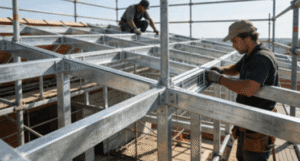
- Follow manufacturer instructions: Every scaffold system has specific assembly guidelines. Frame pieces, braces, and connectors must be installed in the correct sequence to maintain structural integrity.
- Secure connections: Use locking pins, bolts, or clips as specified. Each joint should be tight to prevent wobbling.
- Install cross braces: Cross braces stabilize the frame against lateral forces. They should be installed diagonally and checked for tension. Improper bracing is a common cause of scaffold instability.
- Height considerations: As the scaffolding rises, ensure each level is aligned vertically. Misaligned sections increase the risk of collapse and make platform installation difficult.
- Multi-level scaffolding: For scaffolds with multiple tiers, verify that all locking mechanisms and frame connectors are fully engaged before moving to the next level. Double-check that intermediate platforms are secure before adding additional height.
- Safety tip: Use gloves, helmets, and protective footwear during frame assembly. Avoid rushing, as mistakes at this stage can have severe consequences later.
Step 3: Anchoring and Stabilization
Proper anchoring ensures the scaffolding withstands environmental stresses, worker movement, and material loads:
- Fixed anchoring: Secure the scaffolding to the roof structure using bolts, brackets, or anchor points approved by the manufacturer. This is particularly critical for suspended scaffolding or high-rise installations.
- Suspended scaffolding: Counterweights, tensioned ropes, and locking devices prevent uncontrolled movement. Verify the integrity of anchor points and ropes before workers access the scaffold.
- Mobile scaffolding: Deploy stabilizers and lock wheels to prevent rolling. For uneven surfaces, adjust jack screws to level the platform.
- Wind load considerations: In areas with high wind exposure, additional tie-downs or wind braces may be necessary. Always check regional building codes for minimum wind resistance requirements.
- Vibration control: In industrial or urban environments, ensure that nearby machinery or traffic will not compromise scaffold stability. Adding temporary shock-absorbing supports can prevent swaying.
- Safety tip: Never exceed the recommended load capacity for any scaffolding section. Overloading or unsecured scaffolds are major causes of workplace accidents.
Step 4: Platform Installation
Platforms are the working surface for all scaffolding users. Proper installation ensures safety and comfort:
- Align and level platforms: Use a spirit level to ensure each platform sits evenly. Uneven platforms can cause trips, slips, or material shifting.
- Spacing and overlap: Follow manufacturer guidelines for platform spacing. Avoid gaps that could pose fall hazards. Where platforms overlap, secure them to prevent movement.
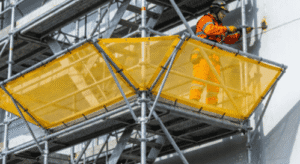
- Guardrails and toe boards: Install guardrails at all open edges and toe boards along platform perimeters. These features prevent falls and protect workers from dropped tools or materials.
- Modular platforms: Many 2026 scaffolding systems include modular platforms that lock in place automatically. This speeds installation while maintaining safety standards.
- Material placement: Place tools, materials, and equipment evenly across platforms. Concentrating weight in one area can destabilize the scaffold.
- Safety tip: Ensure platforms remain free from ice, water, dust, or loose debris to reduce slip risks. Regularly inspect during use.
Step 5: Safety Inspection
Before the scaffolding is used, a detailed safety inspection is mandatory:
- Check all connections: Verify that bolts, clips, and pins are secure. Look for missing or damaged components.
- Platform stability: Test each platform by applying slight weight to ensure it does not wobble or shift.
- Guardrails and anchors: Confirm guardrails are intact, and all anchoring points are properly tensioned.
- Environmental hazards: Identify any nearby hazards such as loose roof tiles, exposed wiring, or overhead obstructions.
- Documentation: Record the inspection results, noting any corrections made. Keeping logs ensures compliance with safety regulations and helps track wear over time.
- Ongoing inspections: Even after initial approval, inspect scaffolding daily or before each work shift. Environmental changes or repeated use can compromise safety.
Roof Scaffolding Load and Safety Guidelines
| Scaffold Type | Max Load Capacity | Recommended Use | Safety Features |
|---|---|---|---|
| Frame Scaffold | 500 kg/m² | Residential, low-rise projects | Guardrails, cross braces |
| Suspended Scaffold | 250-400 kg/m² | High-rise facades, painting | Anchor points, safety harness |
| Mobile Scaffold | 300-350 kg/m² | Indoor, small roof repairs | Lockable wheels, stabilizers |
| Aluminum Modular | 400-500 kg/m² | Commercial, lightweight projects | Non-slip platforms, modular fit |
| Heavy-Duty Steel | 600-700 kg/m² | Large-scale construction | Reinforced braces, guardrails |
Following these guidelines is critical to prevent accidents. Overloading, improper setup, or using damaged components are leading causes of scaffolding-related injuries.
Maintenance and Inspection
Routine Checks
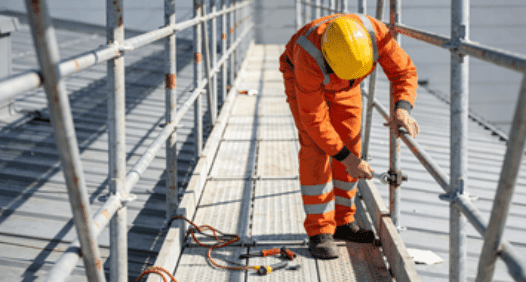
Inspect scaffolding daily or before use. Look for loose bolts, corrosion, bent components, or worn platforms. Document inspections and address any issues promptly.
Cleaning and Care
Remove debris, mud, or snow. Clean metal surfaces to prevent corrosion. Lubricate moving parts if recommended by the manufacturer.
Repair and Replacement
Replace worn or damaged parts immediately. Use only manufacturer-approved components. Regular maintenance extends the lifespan of roof scaffolding and ensures worker safety.
Region-Specific Considerations
- North America: Emphasis on OSHA compliance, mobile scaffolding for residential projects, aluminum systems for transport efficiency
- Europe: High-rise urban sites require steel or modular systems; Scandinavian countries prioritize prefabricated scaffolding with environmental certifications
- Asia: Dense urban areas like Hong Kong and Tokyo use compact, modular scaffolds; corrosion resistance is prioritized in coastal regions
- Middle East: Heavy-duty steel scaffolding is common for large commercial projects; UV-resistant coatings are essential for outdoor installations
Conclusion
Installing roof scaffolding properly is essential for safety, efficiency, and regulatory compliance. Modern 2026 trends emphasize modular systems, lightweight materials, integrated safety features, and eco-conscious options. By following the preparation, installation, and maintenance guidelines outlined in this guide, contractors can minimize accidents, improve workflow, and deliver projects on time.
FAQ
Q1: How long does it take to install roof scaffolding?
A1: It depends on scaffold type, height, and site conditions. Frame scaffolds for small projects may take a few hours; high-rise suspended scaffolds require more planning.
Q2: Can roof scaffolding be reused?
A2: Yes, with proper inspection and maintenance, modular systems can be disassembled and reused multiple times.
Q3: What safety equipment is required?
A3: Guardrails, toe boards, personal harnesses, helmets, and lockable stabilizers are recommended.
Q4: Which materials are best for different projects?
A4: Aluminum for portability and light-duty projects, steel for heavy-duty or high-rise construction, composites for corrosion resistance.
Q5: Are there regional regulations for roof scaffolding?
A5: Yes. OSHA in the U.S., HSE in the U.K., and similar authorities worldwide set strict safety and load requirements.
Thank you for reading! We hope our insights help you work safely and efficiently with frame scaffolds and other construction equipment. For more updates, tips, and discussions, connect with us on Facebook.
Join our community to stay informed, share experiences, and engage with fellow professionals in the scaffolding industry.