Welcome to the Cangzhou Zichen Building Materials blog!
As a leading manufacturer specializing in the R&D, production, and export of construction equipment, we are dedicated to sharing expert knowledge, practical tips, and industry insights. Whether you work with mobile scaffolding, ringlock scaffolding, or adjustable steel props, our goal is to help you improve safety, efficiency, and project quality.
Keep reading to explore essential practices and advice for scaffold users at every level.
Table of Contents
Introduction
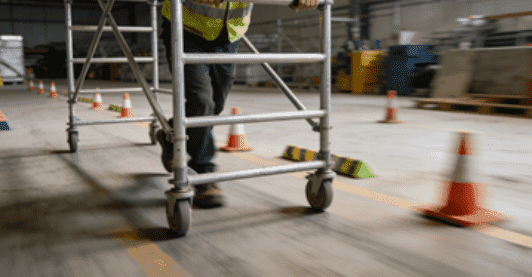
Scaffold wheels are one of the most overlooked yet crucial components of modern scaffolding systems. While they allow scaffolds to move easily across a worksite, they also introduce hidden risks if mismanaged. A small misstep—like ignoring a wheel inspection or misjudging load limits—can result in tip-overs, injuries, or costly delays.
According to a 2025 study by the National Institute for Occupational Safety and Health (NIOSH), nearly 18% of scaffold-related injuries involved moving or unstable wheels, highlighting the critical role that proper scaffold wheels handling plays in job-site safety. Furthermore, a European Construction Safety Survey found that crews who followed systematic scaffold wheel protocols experienced 25% fewer minor accidents and a 15% reduction in equipment damage costs.
This article provides seven essential tips for safer scaffold wheels operation, combining practical advice, real-world data, and expert insights. Whether you’re a site supervisor, a construction worker, or a fleet manager, these strategies will help protect workers and maximize scaffold efficiency.
Selecting the Right Scaffold Wheels for Every Job
Understanding Load Ratings and Safety Margins
Scaffold wheels are rated for specific loads, often ranging from 200 kg to over 500 kg per wheel, depending on design. Choosing wheels with insufficient capacity can create stress on axles, brakes, and the scaffolding structure itself.
Experts recommend selecting wheels with a minimum 25% higher load rating than the combined weight of personnel and materials. This margin ensures safety even if additional tools or supplies are temporarily added.
Surface Compatibility and Environmental Factors
The type of surface affects wheel performance significantly:
- Concrete floors: Standard rubber or polyurethane wheels work well.
- Uneven terrain: Pneumatic or all-terrain wheels improve traction.
- Indoor sensitive floors: Non-marking wheels prevent surface damage.
Construction safety consultant Mark Dempsey notes, “Matching scaffold wheels to terrain is often undervalued. Using the wrong wheels is a leading cause of minor tip-overs.”
Regular Inspection and Maintenance Practices
Daily Pre-Use Checks
Daily inspections prevent small issues from becoming hazards:
- Treads: Look for cracks, excessive wear, or embedded debris
- Axles: Ensure nuts and bolts are tight
- Brakes: Verify all locks engage fully
- Rotation: Spin wheels to check for smooth motion
Periodic Maintenance
Beyond daily checks, wheels should be maintained weekly or monthly:
- Lubricate bearings to reduce friction
- Replace worn treads before they cause instability
- Clean debris from brake mechanisms
- Inspect wheel casings for corrosion or damage
According to the Scaffold Safety Alliance, proper maintenance can extend wheel life by up to 40% and reduce downtime.
Proper Weight Distribution on Scaffold Wheels
Center Load Principle
Weight distribution affects stability. Place heavier tools or equipment near the scaffold’s center to prevent tipping. Avoid stacking materials at the edges.
- Example: A scaffold rated for 400 kg per wheel should not have a 500 kg material load on one side, even if the total weight is within limits.
Avoiding Overloading
Overloading wheels is a common mistake:
- Stress accumulates on a single wheel
- Axles can bend
- Brake systems may fail
Data from a UK construction survey showed that overloaded scaffold wheels contributed to 12% of minor falls from mobile scaffolds in 2023.
Correct Use of Locking Mechanisms and Stabilizers
Engaging locks and stabilizers is a non-negotiable safety practice. Locking wheels prevent accidental movement, particularly when scaffolds are raised or personnel are working on upper platforms.
- Lock all wheels before starting work
- Use outriggers on taller scaffolds
- Avoid relying on ground unevenness as a safety measure
Safety engineer Laura Jensen comments: “Scaffold wheel locks are the single most effective preventive measure against tip-overs on mobile scaffolds.”
Keep the Work Area Clear and Organized
Obstacles and debris increase the risk of sudden stops or uncontrolled movement:
- Remove loose tools, cables, and cords from pathways
- Ensure surfaces are flat, clean, and dry
- Stabilize temporary ramps before moving scaffolds
Well-organized work zones also improve productivity, as workers can move scaffolds without unnecessary stops.
Safe Moving Techniques for Scaffold Wheels
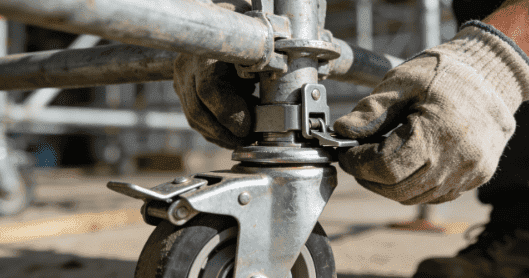
Controlled Movement
When repositioning scaffolds:
- Push from the base, not from the platform
- Move slowly to maintain balance
- Avoid moving scaffolds with personnel on them unless approved
Avoiding Sudden Braking or Steering
Abrupt wheel stops or sharp turns can destabilize the scaffold, especially on taller structures. Controlled, steady movement is essential.
Training and Awareness Programs
Proper training ensures every operator understands scaffold wheel safety:
- Identify hazards and weight limits
- Practice inspection routines
- Understand braking and stabilization procedures
- Learn correct moving and handling techniques
A 2024 OSHA compliance report found that sites with formal scaffold wheels training programs reduced accidents by 30% compared to untrained crews.
Scaffold Wheels Tips Comparison Table
| Tip | Key Considerations | Common Mistakes | Recommended Action |
|---|---|---|---|
| Selection | Load rating, terrain type | Wrong wheel for surface | Choose wheels rated for load and surface |
| Inspection | Treads, axles, brakes | Skipping daily checks | Inspect wheels daily and maintain regularly |
| Weight Distribution | Center load, avoid overloading | Uneven weight | Distribute weight evenly across wheels |
| Locks & Stabilizers | Engage brakes, use outriggers | Ignoring locks | Lock all wheels, deploy stabilizers |
| Work Area | Clear obstacles, dry surfaces | Working in clutter | Keep paths clear, stabilize ramps |
| Moving Techniques | Push steadily, avoid personnel on moving scaffold | Sudden movement | Move slowly and with control |
| Training | Knowledge of hazards, handling | Lack of proper instruction | Provide comprehensive training |
Additional Professional Insights
Industry experts consistently emphasize the importance of combining equipment, maintenance, and human factors:
- Mark Dempsey, Safety Consultant: “Even the best scaffold wheels can fail if operators ignore basic safety principles.”
- Laura Jensen, Engineer: “A mobile scaffold’s stability is only as good as its wheels and the operator’s awareness.”
- NIOSH Recommendations: Daily inspections and proper load distribution significantly reduce scaffold-related injuries.
These insights reinforce that scaffold wheel safety is a combination of proper equipment, consistent maintenance, and well-trained personnel.
Real-World Case Studies
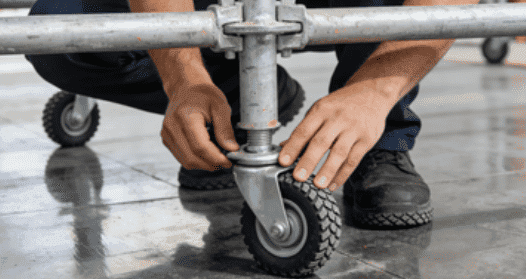
Case 1: Tipping Prevention
A contractor in Germany avoided a potential accident when they followed weight distribution protocols. A scaffold loaded with materials remained stable despite sudden gusts of wind, highlighting the importance of proper load management.
Case 2: Brake Failure Avoidance
In a US warehouse, an operator discovered a malfunctioning wheel brake during pre-use inspection. Prompt replacement prevented what could have been a serious tip-over.
Case 3: Training Saves Lives
At a London construction site, a newly trained operator correctly used locks and stabilizers when repositioning a scaffold, preventing injury to a nearby worker.
Conclusion
Scaffold wheels are a small but critical component of scaffolding systems. By carefully selecting wheels, conducting inspections, distributing weight properly, engaging locks, clearing work areas, moving scaffolds safely, and training personnel, construction teams can prevent accidents, protect equipment, and improve efficiency. Implementing these top 7 tips cultivates a culture of safety and ensures that every scaffold move is secure, predictable, and efficient.
FAQ
How frequently should scaffold wheels be inspected?
Daily pre-use inspections are recommended, with detailed maintenance monthly or weekly depending on usage.
Can scaffolds be moved with workers on them?
Only if the wheels and platform are rated for movement with personnel, and proper locking and surface conditions are ensured.
Are all scaffold wheels interchangeable?
No. Different surfaces, loads, and environments require specific wheel types. Choosing the wrong type increases risk.
What additional safety measures complement scaffold wheels?
Locks, outriggers, proper load distribution, and worker training are essential.
Why is training so important for scaffold wheels safety?
Even the best equipment can fail if operators are not trained. Training ensures proper handling, inspection, and accident prevention.
Thank you for reading! We hope our insights help you work safely and efficiently with frame scaffolds and other construction equipment. For more updates, tips, and discussions, connect with us on Facebook.
Join our community to stay informed, share experiences, and engage with fellow professionals in the scaffolding industry.