Welcome to the Cangzhou Zichen Building Materials blog! As a leading manufacturer specializing in the R&D, production, and export of construction equipment, we are dedicated to sharing expert knowledge, practical tips, and industry insights. Whether you work with mobile scaffolding, ringlock scaffolding, or adjustable steel props, our goal is to help you improve safety, efficiency, and project quality. Keep reading to explore essential practices and advice for scaffold users at every level.
Table of Contents
Selecting the right scaffold size is not simply a matter of choosing the tallest available model. Platform dimensions, working height, base width, load capacity, access conditions, and stability requirements all influence whether a scaffold is suitable for a specific project.
Key takeaways:
- Distinguish platform height from working height before requesting a quotation.
- Measure doors, aisles, ceilings, and floor conditions at the jobsite.
- Choose platform length and width according to workers, tools, and materials.
- Match the base dimensions to the required tower height and stability plan.
- Consider outriggers, guardrails, casters, and access ladders in the overall size.
- Confirm local safety requirements before ordering or assembling equipment.
- Request a project-specific configuration instead of relying only on standard sizes.
What Do Mobile Scaffold Dimensions Mean?
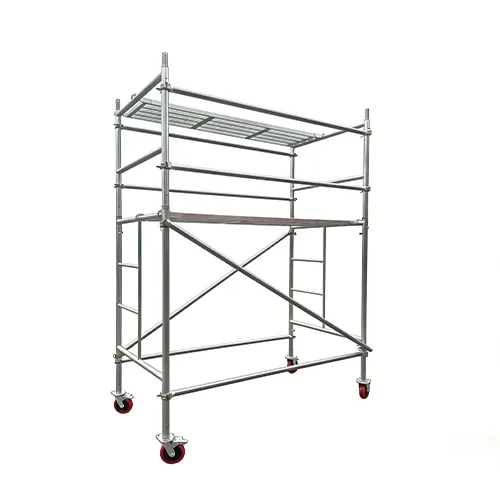
Mobile scaffolds are temporary elevated work platforms supported by frames or modular components and fitted with casters. They are frequently used for painting, electrical installation, warehouse maintenance, façade work, MEP projects, and interior finishing.
A complete size specification normally includes height, length, width, platform dimensions, and caster diameter. Buyers should understand each measurement because two towers described as the same “size” may offer different usable workspaces or working heights.
Platform Height
Platform height is the vertical distance from the supporting floor to the surface on which the worker stands. It does not include the worker’s body height or overhead reach.
For example, a platform positioned 4 meters above the floor does not automatically mean that the complete scaffold is only 4 meters tall. Guardrails and other components extend above the platform.
Working Height
Working height is an estimated height that a person can comfortably reach while standing on the platform. Suppliers commonly calculate it by adding approximately 1.8 to 2 meters to the platform height, but this convention can vary.
Buyers should state whether the requested figure refers to platform height, overall tower height, or working height. This prevents configuration and quotation errors.
Overall Height
Overall height measures the assembled structure from the floor to its highest point, usually the upper guardrail. This dimension matters when mobile scaffolds are used beneath ceilings, beams, pipes, or production equipment.
Always measure the lowest overhead obstruction rather than relying only on the nominal ceiling height. Lighting, ducts, sprinklers, and suspended installations may reduce the available clearance.
Platform Length and Width
Platform dimensions determine the usable area available for workers, tools, and materials. A longer platform provides a wider working range, while a broader platform can improve usability and offer more room for equipment.
However, larger platforms also require more storage space and may be harder to move through narrow areas. The correct choice should balance workspace, mobility, and structural capacity.
Typical Mobile Scaffolds Size Range
Scaffold dimensions vary by manufacturer, system, material, and regional standard. The following table presents common selection ranges for initial project planning rather than universal product specifications.
| Application | Typical Platform Length | Typical Platform Width | Approx. Working Height | Important Consideration |
|---|---|---|---|---|
| Indoor repair work | 1.2–1.8 m | 0.6–0.75 m | 2.5–4.5 m | Door and corridor clearance |
| Painting and finishing | 1.5–2.0 m | 0.75–1.35 m | 3–8 m | Frequent repositioning |
| Warehouse maintenance | 1.8–2.5 m | 0.75–1.35 m | 4–10 m | Floor condition and aisle width |
| MEP installation | 1.8–2.5 m | 1.0–1.35 m | 4–12 m | Space for tools and components |
| Exterior construction | 2.0–3.0 m | 1.0–1.5 m | Project-specific | Wind and stabilization plan |
| Industrial maintenance | 2.0–3.0 m | 1.35–1.5 m | Project-specific | Load class and site obstacles |
These figures should only be used to narrow down possible configurations. Final dimensions must be checked against manufacturer instructions, local regulations, structural requirements, and an assessment by a competent person.
How to Choose the Right Mobile Scaffolds Size
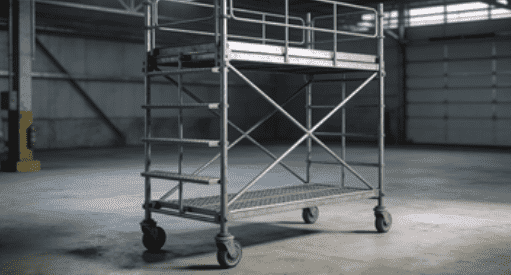
The most effective selection process begins at the jobsite. Buyers should record the required reach, available floor space, access route, expected platform load, and frequency of movement before comparing models.
Step 1: Calculate the Required Working Height
Begin with the highest point that workers must reach. Then determine the platform height needed to perform the task without excessive stretching, climbing on guardrails, or using makeshift objects on the platform.
Avoid the “Tower Height” Assumption
A request such as “I need an 8-meter scaffold” is incomplete. It could mean an 8-meter working height, an 8-meter platform, or an 8-meter overall structure.
Provide the supplier with a drawing or a clear measurement from the floor to the work area. This allows the supplier to recommend a more accurate configuration.
Step 2: Measure the Available Floor Area
Record the narrowest doorway, corridor, elevator, aisle, and turning point along the transportation route. A tower that fits inside the work area may still be impossible to move from the unloading point to that area.
If indoor mobility is important, compare the assembled base dimensions with every access restriction. Also check whether the system can be partially disassembled for transport between rooms.
Step 3: Select the Platform Length
A short platform is easier to maneuver in compact areas, but workers may need to reposition it more often. A longer platform can cover a broader section of wall, ceiling, or façade during each setup.
For linear tasks such as painting, piping, or cable installation, platform length can directly affect workflow. Buyers should compare the productivity gained from a longer deck against the additional space and weight it requires.
Step 4: Select the Platform Width
Narrow mobile scaffolds are useful in corridors and between equipment, while wider configurations provide more working space. Width also affects the base footprint and must be considered as part of the complete stability plan.
The platform must still provide sufficient space for the intended work. OSHA’s general scaffold guidance states that scaffold platforms and walkways normally need to be at least 18 inches (46 cm) wide, subject to specific exceptions and applicable regulations.
Step 5: Confirm the Intended Load
The total load includes workers, tools, stored materials, and any equipment placed on the platform. Platform size alone does not indicate how much weight a system can safely support.
Never assume that a larger deck automatically has a higher load capacity. Ask the supplier for the system’s rated capacity, load class, component specifications, and permitted load distribution.
Narrow vs Wide Mobile Scaffolds
Width is one of the most important choices for buyers working in warehouses, workshops, hotels, shopping centers, and industrial facilities.
| Selection Factor | Narrow Tower | Wide Tower |
|---|---|---|
| Access through confined areas | Better | More restricted |
| Available platform space | Limited | More generous |
| Ease of manual movement | Usually easier | May require more planning |
| Storage and transportation | More compact | Requires more space |
| Suitability for multiple workers | Configuration-dependent | Often more practical |
| Stability requirements | Requires careful assessment | Wider base may be beneficial |
| Typical use | Corridors and indoor repairs | Construction and industrial work |
When Is a Narrow Tower Better?
A narrow tower may be the practical choice when work takes place between shelving, machinery, or fixed building elements. It can also reduce the amount of disassembly required when moving between rooms.
The buyer must still verify platform capacity, minimum workspace requirements, and the permitted height-to-base relationship. Compact dimensions should never be achieved by omitting required stabilizing components.
When Is a Wide Tower Better?
A wide tower provides additional platform space for tasks involving larger tools or multiple work positions. It may also accommodate broader deck arrangements and project-specific stabilization solutions.
However, buyers must check whether the complete base, including outriggers where required, fits the work area. The nominal frame width alone may not represent the tower’s final operating footprint.
Short vs Long Scaffold Platforms
Platform length affects both productivity and maneuverability. There is no single length that is ideal for every project.
Short Platforms for Confined Work
Short platforms are generally easier to transport, store, and turn inside restricted spaces. They are useful for localized inspection, repairs, and installation work.
The trade-off is a smaller horizontal work range. Repeated movement may reduce efficiency when the task extends across a long wall or ceiling.
Long Platforms for Continuous Tasks
Longer platforms allow workers to cover more of the workface before moving the tower. They can be beneficial for painting, cladding inspection, electrical installation, and mechanical services.
Long components can be more difficult to handle and ship. Buyers should also confirm permissible spans, deck support points, and load distribution with the manufacturer.
How Height Affects Base Size and Stability
As the platform rises, overturning risk becomes increasingly important. The safe configuration depends on the tower geometry, manufacturer instructions, operating environment, supporting surface, and applicable standards.
Base-to-Height Relationship
A height-to-base ratio is sometimes used as an initial stability reference, but it should not be treated as a universal design rule. Regulations and manufacturer requirements vary by market and scaffold type.
Project managers should use the supplier’s approved configuration and arrange engineering review when required. Adding unapproved components or exceeding the specified height can change the structural behavior of the tower.
Outriggers and Stabilizers
Outriggers increase the effective footprint of mobile scaffolds and can provide additional resistance against tipping. Their required size and position depend on the scaffold configuration and manufacturer’s instructions.
Remember to include deployed outriggers when measuring the operating area. A tower may pass through a doorway but require significantly more floor space before workers can use it.
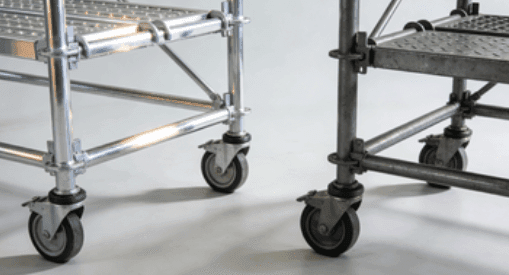
Casters and Adjustable Legs
Caster diameter affects mobility over joints, thresholds, and uneven surfaces. Larger wheels may roll more easily over suitable surfaces, but they also influence the base height and overall tower configuration.
Adjustable legs or screw jacks may help level the structure within their permitted adjustment range. They are not a substitute for a firm, suitable supporting surface.
Steel vs Aluminum Size Considerations
Both steel and aluminum systems can be configured for mobile access, but their material properties influence handling, transportation, and application suitability.
Aluminum Mobile Scaffolds
Aluminum components are relatively lightweight, which can simplify manual assembly and frequent repositioning. They are commonly selected for indoor maintenance, electrical work, decoration, and projects where portability matters.
Their lower component weight does not remove the need to check load capacity or stability. Buyers should compare certified specifications rather than selecting equipment by material alone.
Steel Mobile Scaffolds
Steel systems are often considered for demanding construction and industrial applications. Their robust components may suit projects involving frequent use or heavier operational conditions.
Steel components are generally heavier to carry and move. The floor capacity, labor requirements, corrosion protection, and transport plan should therefore be evaluated before purchase.
For a wider comparison of available configurations, buyers can explore Zichen’s scaffolding product range and its overview of mobile and modular scaffold systems.
Size Selection by Application
Different tasks create different dimensional priorities. Purchasing teams should define the main application before requesting standard or customized mobile scaffolds.
Indoor Painting and Decoration
Compact length and width are useful for moving through doors and around furniture. The working height should be selected according to the ceiling and upper wall areas without creating unnecessary tower height.
Non-marking or application-appropriate casters may also be relevant for finished floors. Confirm caster compatibility and floor protection requirements with the supplier.
Warehouse and Factory Maintenance
Warehouse work often involves high ceilings, narrow aisles, shelving, pipes, and active equipment. Buyers should measure both the tower footprint and the clearance required to move it safely.
A longer platform may improve productivity along racking or service lines. Nevertheless, the complete operating area must remain separated from vehicles and other site traffic.
Exterior Construction
Outdoor work requires closer attention to wind exposure, terrain, base conditions, and falling-object controls. Choosing a wider scaffold does not by itself make an outdoor tower safe.
The configuration should follow the manufacturer’s instructions and the project safety plan. Work may need to stop when weather conditions exceed permitted limits.
MEP Installation
Mechanical, electrical, and plumbing work often requires workers to carry tools and installation materials. A wider or longer platform can provide useful workspace, provided the load remains within the rated limit.
The tower must also fit around ducts, pipes, machinery, and completed services. Early coordination with site drawings can reduce later configuration changes.
Mobile Scaffold Size Buying Checklist
Before sending an inquiry, prepare the following information:
- Required working height and platform height
- Maximum available overall height
- Preferred platform length and width
- Narrowest access point
- Indoor or outdoor application
- Number of workers using the platform
- Combined weight of workers, tools, and materials
- Floor type, slope, and surface condition
- Frequency of scaffold movement
- Required caster type and diameter
- Applicable national or project standard
- Need for outriggers, toe boards, guardrails, or access components
- Shipping destination and container requirements
- Drawings or photographs of the work area
If the correct configuration is still unclear, review Zichen’s mobile scaffolding system guide or learn how a mobile scaffold compares with a ladder for different elevated tasks.
Common Size Selection Mistakes
Ordering by Height Alone
Height is only one part of the specification. A tower may reach the work area but still be unsuitable because its platform is too small, its footprint is too large, or its load rating is insufficient.
A complete request should include the working environment and intended task. This enables a supplier to evaluate the configuration rather than quote isolated components.
Ignoring the Deployed Footprint
Buyers sometimes measure only the frame width and forget stabilizers or outriggers. This can result in a system that cannot be fully deployed in the available work area.
Measure the complete operating footprint and keep required clearance around the structure. Access routes and emergency paths should not be obstructed.
Confusing Platform Area with Load Capacity
A large platform can hold more objects physically, but this does not mean it is permitted to carry more weight. Structural capacity depends on the complete system and the distribution of loads.
Always obtain documented ratings from the manufacturer. Avoid concentrating heavy materials in one section unless the approved configuration specifically permits it.
Mixing Incompatible Components
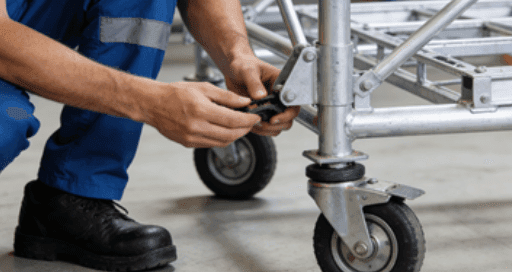
Components from different systems may appear to have similar dimensions but can use different joints, tolerances, materials, or load ratings. Mixing parts can invalidate the approved configuration and introduce serious safety risks.
Use compatible components identified by the manufacturer. Inspect connections, braces, platforms, and casters before assembly and use.
Safety Standards to Check Before Ordering
Scaffold requirements differ between countries and projects. Buyers should confirm the applicable local regulations, standards, site rules, and manufacturer instructions before finalizing dimensions.
For projects governed by US requirements, refer to the official OSHA guidance for mobile supported scaffolds. OSHA specifies, among other provisions, that mobile scaffolds must be plumb, level, squared, properly braced, and fitted with locking devices to prevent movement while used in a stationary position.
OSHA’s general scaffold requirements also provide guidance on platform dimensions, access, fall protection, capacity, and safe use. Projects outside the United States should follow the rules and standards applicable in their target market.
Conclusion
The right size is determined by more than the height of the work area. Buyers must consider platform dimensions, overall footprint, access restrictions, rated load, caster selection, stabilization measures, and applicable safety requirements together.
Before purchasing mobile scaffolds, provide the supplier with accurate site measurements, application details, expected loads, and required standards. Zichen offers a broad selection of scaffolding products and components for different construction, maintenance, and industrial access requirements. A detailed project inquiry can help identify a configuration that balances reach, workspace, mobility, and safe operation.
FAQ
What size mobile scaffold do I need for a 6-meter ceiling?
The answer depends on the worker’s required reach and the exact task. A platform height of roughly 4 to 4.2 meters may offer a working reach near 6 meters, but the supplier must confirm the calculation, guardrail clearance, base size, and approved configuration.
How do I calculate mobile scaffold working height?
Working height is commonly estimated by adding approximately 1.8 to 2 meters to the platform height. Because suppliers may use different conventions, always ask for platform height, overall height, and stated working height separately.
Will a mobile scaffold fit through a standard doorway?
Some narrow models may fit through certain doors, while wider towers may require partial disassembly. Measure the actual door width and height, including frames, thresholds, handles, and nearby turning space, before ordering.
Is a wider mobile scaffold always safer?
No. Width is only one stability factor. Tower height, bracing, outriggers, caster condition, floor surface, load distribution, wind, and correct assembly all influence safe use.
What is the best platform size for two workers?
There is no universal platform size for two workers. The selected system must provide adequate working space and have a rated capacity covering both workers, their tools, and all materials on the platform.
Can I add more frames when I need extra height?
Only if the manufacturer’s approved configuration permits the additional height and all required braces, stabilizers, access components, and guardrails are installed. Never extend mobile scaffolds with improvised parts or exceed the stated limits.
What caster size should I choose for uneven floors?
Caster selection depends on surface condition, load, scaffold design, and manufacturer compatibility. Larger casters may improve movement across suitable surfaces, but mobile towers should not be used on unsafe, excessively uneven, obstructed, or unstable ground.
Should I choose a custom size or a standard size?
Standard dimensions are usually easier to replace, expand, transport, and reuse. A custom configuration may be worthwhile when a project has unusual access restrictions, specialized equipment, or repeated work in a specific environment.
Thank you for reading! We hope our insights help you work safely and efficiently with frame scaffolds and other construction equipment. For more updates, tips, and discussions, connect with us on Facebook. Join our community to stay informed, share experiences, and engage with fellow professionals in the scaffolding industry.