Table of Contents
Key Takeaways
- Ringlock scaffolding uses standardized rosette connections, while tube and clamp scaffolding relies on separate tubes and couplers.
- Ringlock systems are especially suitable for repetitive structures, façades, access towers, and projects requiring organized modular assembly.
- Tube and clamp scaffolding provides greater flexibility around irregular structures, industrial equipment, tanks, piping, and complex geometry.
- Project geometry, required loads, erection conditions, component compatibility, working platforms, and local regulations should guide system selection.
- Scaffold couplers, steel scaffold planks, adjustable jacks, braces, and access components should be planned as part of the complete scaffold configuration.
- Neither system is universally superior; the most suitable option depends on the actual construction environment.
Introduction

Ringlock scaffolding and tube and clamp scaffolding are two widely used approaches to temporary access and support structures, but they solve project challenges in different ways.
The main distinction is the connection method.
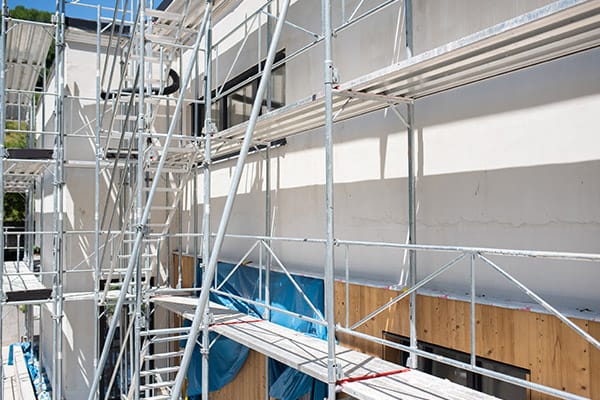
A ringlock scaffolding system uses vertical standards fitted with regularly positioned rosettes. Horizontal ledgers and diagonal braces connect directly to these nodes. Tube and clamp scaffolding, also known as tube and coupler scaffolding, uses scaffold tubes joined with separate fittings such as right-angle couplers, swivel couplers, and sleeve couplers.
This difference affects much more than assembly. It influences project flexibility, component planning, inventory control, erection procedures, transportation, maintenance, and the ability to adapt scaffolding around complex structures.
Zichen’s Ringlock Scaffolding range forms part of a broader scaffolding product portfolio that also includes Scaffolding Couplers, steel scaffold planks, scaffold poles, adjustable jacks, and temporary support products.
Understanding how these systems differ makes it easier to select a scaffold based on engineering and project requirements instead of relying only on familiarity with one system.
What Is Ringlock Scaffolding?
Ringlock scaffolding is a modular system based on standardized connection nodes.
Vertical standards contain welded rosettes positioned at defined intervals. Ledgers and diagonal braces connect to these rosettes through compatible heads and locking wedges.
The resulting scaffold is built around a repeatable structural grid.
Typical ringlock scaffolding components include:
- Vertical standards
- Rosettes
- Horizontal ledgers
- Diagonal braces
- Adjustable base jacks
- Base plates
- U-head jacks
- Steel scaffold planks
- Guardrails
- Toe boards
- Stair units
- Access ladders
- Brackets
- Spigots and connecting pins
The modular design makes it possible to plan component quantities according to bay length, lift height, platform level, and scaffold geometry.
The Zichen guide to ringlock scaffolding components explains how standards, ledgers, braces, jacks, and platforms function together within a complete system.
What Is Tube and Clamp Scaffolding?
Tube and clamp scaffolding uses individual scaffold tubes connected by separate couplers.
The system is commonly described as:
- Tube and clamp scaffolding
- Tube and coupler scaffolding
- Tube and fitting scaffolding
- Tubular scaffolding
A general explanation of tube and clamp scaffolding shows how steel or aluminum tubes can be connected using fittings to create vertical, horizontal, and diagonal scaffold members.
Common components include:
- Scaffold tubes
- Right-angle couplers
- Swivel couplers
- Sleeve couplers
- Putlog couplers
- Base plates
- Adjustable base jacks
- Scaffold boards or steel planks
- Guardrails
- Toe boards
- Ties
- Access components
Because the connections are not limited to welded rosette positions, the system provides considerable freedom when scaffolding must follow complex structures.
Ringlock vs Tube and Clamp Scaffolding at a Glance
| Comparison | Ringlock Scaffolding | Tube and Clamp Scaffolding |
|---|---|---|
| Main connection | Rosette and wedge | Separate couplers |
| Connection positions | Standardized | Flexible |
| Assembly pattern | Modular | Individually configured |
| Repetitive layouts | Excellent | Good |
| Irregular geometry | Good | Excellent |
| Component planning | System-based | Tube and fitting based |
| Inventory structure | Organized by modular part | Tubes plus multiple fittings |
| Typical erection | Repetitive connection sequence | More individual connections |
| Modification flexibility | High | Very high |
| Access towers | Very suitable | Suitable |
| Industrial maintenance | Suitable | Highly adaptable |
| System compatibility | Critical | Tube/coupler compatibility critical |
The table provides a general comparison. Final scaffold selection must still reflect the approved design, project loads, working environment, local regulations, and manufacturer requirements.
Connection Method: The Most Important Difference
The connection system explains many of the practical differences between the two scaffold types.
Ringlock Connections
Each vertical standard contains fixed rosettes.
Compatible horizontal and diagonal members connect at these predetermined nodes. Once a bay arrangement has been established, the same component combinations can be repeated throughout similar areas of the scaffold.
This makes ringlock particularly effective where a project contains:
- Repeated floor heights
- Long straight façades
- Standard platform levels
- Modular access towers
- Repetitive shoring towers
- Large open working areas
Tube and Coupler Connections
Tube scaffolding does not depend on fixed rosettes.
Instead, workers connect tubes at positions determined by the scaffold layout.
A Right Angle Scaffold Clamp can create perpendicular tube connections, while swivel couplers can accommodate diagonal or angled members.
This flexibility can be advantageous where a scaffold must closely follow an existing structure.
Which System Is Easier to Assemble?
For large repetitive scaffolding layouts, ringlock generally provides a more standardized erection process.
Workers repeatedly install:
- Standards
- Ledgers
- Braces
- Platforms
- Guardrails
- Access components
The position of major structural connections is largely defined by the system itself.
Tube and clamp scaffolding requires workers to position tubes and select the correct fitting for each joint.
This does not automatically mean tube scaffolding is inefficient. On highly irregular structures, the flexibility of tube positioning may actually reduce the need for special modular parts.
The important distinction is therefore:
Ringlock favors repeatability, while tube and clamp favors adaptability.
Which Is Better for Complex Geometry?
Tube and clamp scaffolding has a strong advantage when project geometry changes frequently.
Examples include:
- Industrial pipe racks
- Storage tanks
- Refineries
- Curved structures
- Mechanical equipment
- Bridges
- Machinery
- Narrow maintenance areas
- Structural steel frameworks
Separate scaffold tubes can be positioned around obstructions and connected using different coupler types.
Ringlock scaffolding can also handle complex projects, particularly when the system includes multiple ledger lengths, brackets, beams, and supplementary accessories.
However, extremely irregular structures may require more transitions and special configurations than tube and coupler systems.
Ringlock for Building Façades
Straight or relatively repetitive building façades are one of the environments where modular scaffolding performs particularly well.
A typical façade scaffold may contain:
- Repeated bays
- Consistent lift heights
- Similar working levels
- Regular access points
- Repeated guardrail arrangements
Once the first section is planned, many later sections can use a similar component configuration.
This simplifies quantity planning and can make inventory easier to manage.
Zichen’s Scaffold Poles can form part of modular vertical scaffold arrangements when matched with compatible horizontal and diagonal components.
Tube and Clamp for Industrial Scaffolding
Industrial plants present a different challenge.
Scaffolding may need to pass around:
- Pipes
- Boilers
- Tanks
- Valves
- Structural steel
- Conveyors
- Machinery
- Existing access platforms
In these conditions, the ability to position scaffold tubes at different angles and locations becomes valuable.
Zichen’s existing article about industrial scaffolding systems provides additional information about temporary access solutions for complex industrial environments.
For many industrial projects, system selection should be based on the actual equipment layout rather than selecting one scaffold type for the entire facility.
The Role of Scaffolding Couplers
Scaffolding couplers are central to tube and clamp systems.
Different fittings serve different structural purposes.
Right-Angle Coupler
A right-angle coupler connects two tubes positioned approximately 90 degrees apart.
It is commonly used where vertical and horizontal scaffold tubes intersect.
Swivel Coupler
A swivel coupler allows tubes to meet at different angles.
It is commonly associated with diagonal bracing and irregular connections.
Sleeve Coupler
A sleeve coupler connects two scaffold tubes along the same axis.
Putlog Coupler
Putlog couplers are used in specific secondary tube connections according to the intended scaffold arrangement.
Beam Clamp
A beam clamp can provide a specialized connection between scaffold components and structural steel where the project design permits.
Zichen’s Coupler category contains several scaffold fitting options that can support tube-based scaffolding requirements.
For projects following U.S. requirements, the OSHA tube and coupler scaffolding guidance provides useful information about this scaffold type and its associated hazards.
Scaffold Planks Matter in Both Systems
Regardless of which structural system is selected, workers still require a suitable working platform.
Zichen’s Steel Scaffold Planks can form part of compatible scaffold platform configurations.
Plank selection should consider:
- Length
- Width
- Steel thickness
- Reinforcement design
- Hook configuration
- Supporting span
- Surface profile
- Anti-slip features
- Platform locking
- Required load
- Corrosion protection
A scaffold platform should be planned at the same time as the structural scaffold rather than added after the standards, ledgers, or tubes have already been ordered.
OSHA’s general scaffolding requirements provide an authoritative reference for U.S. projects concerning scaffold platforms, supports, access, and related construction requirements.
Ringlock vs Tube and Clamp for Bridge Projects
Bridge construction and maintenance can involve both repetitive and highly irregular conditions.
Ringlock scaffolding may be suitable for:
- Repeated support towers
- Pier access
- Deck access
- Working platforms
- Modular stair towers
Tube and clamp scaffolding may be useful for:
- Localized bridge repair
- Complex structural steel
- Irregular pier shapes
- Existing bridge geometry
- Restricted maintenance access
The project phase also matters.
A scaffold used during new bridge construction may require a different solution from scaffolding used for inspection or rehabilitation.
Ringlock Scaffolding for Shoring Applications
Some modular scaffold systems can also be configured for temporary supporting applications where specifically designed for the required loads.
Typical components may include:
- Vertical standards
- Horizontal ledgers
- Diagonal braces
- Adjustable base jacks
- U-head jacks
Zichen’s U Head Scaffolding Jack provides an adjustable top-support component that can be used in suitable temporary support configurations.
This type of structure should not automatically be treated as ordinary access scaffolding.
The concept of falsework describes temporary supporting structures used to carry permanent construction until that construction becomes capable of supporting itself.
Engineering requirements can therefore differ significantly from those for a standard worker-access scaffold.
Component Compatibility
One of the most important procurement considerations for either system is compatibility.
Ringlock Compatibility Checks
Confirm:
- Tube diameter
- Wall thickness
- Rosette dimensions
- Rosette spacing
- Ledger-head geometry
- Wedge dimensions
- Brace-head geometry
- Spigot design
- Platform compatibility
- Jack dimensions
Two products both described as ringlock scaffolding are not necessarily interchangeable.
Tube and Coupler Compatibility Checks
Confirm:
- Tube outside diameter
- Tube wall thickness
- Coupler size
- Coupler type
- Bolt dimensions
- Nut specification
- Material
- Surface treatment
- Required testing
- Intended joint
A coupler fitting around a scaffold tube does not automatically prove that the connection is suitable for the intended structural function.
Surface Treatment and Outdoor Use
Scaffolding is frequently exposed to demanding environmental conditions.
Typical factors include:
- Rain
- Humidity
- Coastal air
- Concrete contamination
- Site mud
- Repeated transport
- Outdoor storage
- Frequent erection and dismantling
Common finishes include:
Hot-Dip Galvanized
Often selected for long-term reusable scaffold inventories where corrosion resistance is important.
Pre-Galvanized
Used for selected components depending on manufacturing method and project requirements.
Electro-Galvanized
Common on certain smaller fittings and accessories.
Painted
Can provide practical surface protection and easy visual identification in suitable applications.
When comparing finishes, procurement teams should ask about the actual process rather than judging only from photographs.
Inventory and Logistics
Scaffolding can involve thousands of individual components.
Inventory strategy therefore matters.
Ringlock Inventory
A typical ringlock stock may be divided into:
- Standards by length
- Ledgers by length
- Braces by size
- Steel decks
- Base jacks
- U-head jacks
- Guardrails
- Access units
Because the parts follow a modular structure, stock organization can be relatively systematic.
Tube and Clamp Inventory
Tube-and-coupler systems involve both long tubular members and large quantities of smaller fittings.
Inventory may include:
- Multiple tube lengths
- Right-angle couplers
- Swivel couplers
- Sleeve couplers
- Putlog couplers
- Beam clamps
- Bolts and nuts
Small fitting losses can create major site problems even when sufficient scaffold tubes remain available.
Inspection Requirements
Neither scaffold system should be judged only when it leaves the factory.
Components also require inspection throughout transport, storage, erection, use, dismantling, and reuse.
Ringlock Inspection
Look for:
- Bent standards
- Damaged rosettes
- Cracked welds
- Deformed ledger heads
- Damaged wedges
- Bent braces
- Damaged spigots
- Corrosion
- Deformed platforms
Tube and Coupler Inspection
Look for:
- Bent tubes
- Corrosion
- Cracked coupler bodies
- Worn bolts
- Damaged threads
- Missing nuts
- Deformation
- Unapproved modifications
Zichen’s guide to scaffold parts, safety and stability provides additional context on why connections, braces, platforms, and supporting components must work together.
Project Selection Matrix
| Project Type | Ringlock | Tube and Clamp |
| High-rise façade | Excellent | Good |
| Residential construction | Excellent | Good |
| Commercial building | Excellent | Good |
| Industrial pipework | Good | Excellent |
| Storage tank maintenance | Good | Excellent |
| Access tower | Excellent | Good |
| Repetitive bridge tower | Excellent | Good |
| Irregular bridge repair | Good | Excellent |
| Complex machinery access | Moderate–Good | Excellent |
| Modular shoring | Excellent when designed accordingly | Project-specific |
| Rental fleet | Excellent for modular inventory | Excellent for flexibility |
This comparison is intended for initial planning only. Final scaffold configuration should always be determined from project-specific engineering requirements.
How to Choose the Right System
Before requesting a scaffolding quotation, project teams should answer several questions.
What Is the Structure Geometry?
A straight façade and an industrial processing unit require very different scaffolding strategies.
Provide drawings, photographs, dimensions, or models whenever possible.
How Repetitive Is the Scaffold Layout?
Repeated bays generally strengthen the case for a modular system.
Frequent changes in geometry may increase the value of tube-and-coupler flexibility.
How Many Working Levels Are Required?
Working levels affect:
- Platform quantity
- Guardrails
- Access
- Bracing
- Structural loading
- Material distribution
What Loads Must Be Considered?
Scaffold design may need to account for:
- Workers
- Tools
- Construction materials
- Equipment
- Platform loads
- Environmental loads
- Temporary structural loads
How Often Will the Equipment Be Reused?
For reusable inventory, evaluate:
- Surface treatment
- Component durability
- Replacement availability
- Storage
- Identification
- Maintenance
- Compatibility with existing stock
Which Country Will Use the Equipment?
Different countries and projects may reference different scaffold standards and regulations.
The target market should therefore be confirmed before manufacturing specifications are finalized.
Procurement Checklist
| Item | What to Confirm |
| Scaffold drawings | Overall configuration |
| System type | Ringlock or tube and coupler |
| Steel specification | Required material |
| Tube dimensions | Diameter and wall thickness |
| Connections | Rosette or coupler specifications |
| Braces | Correct size and quantity |
| Platforms | Width, length and locking |
| Jacks | Adjustment range and compatibility |
| Access | Stair or ladder requirements |
| Guardrails | Edge-protection arrangement |
| Surface treatment | Galvanized, painted or other |
| Testing | Required project documentation |
| Packing | Bundles, pallets and small-part storage |
| Existing inventory | Compatibility with current equipment |
| Spare components | Wedges, couplers, bolts or other parts |
Common Selection Mistakes
Selecting the System Only by Material Cost
Scaffolding cost is affected by much more than steel weight.
Assembly labor, component quantity, reuse, transport, maintenance, storage, and project geometry all influence the overall result.
Assuming Ringlock Is Always Faster
Ringlock can be very efficient on repetitive structures, but unusual geometry may require additional adaptation.
Assuming Tube and Clamp Is Outdated
Tube and coupler scaffolding remains useful precisely because its connection positions are highly flexible.
Ignoring Working Platforms
A structural frame without suitable scaffold planks does not provide a complete working scaffold.
Mixing Incompatible Components
Similar appearance does not guarantee compatibility.
Forgetting Access
Stairways, ladders, hatches, and access platforms should be included during initial planning.
Conclusion
Ringlock scaffolding and tube and clamp scaffolding are both effective temporary construction systems, but they are optimized for different conditions.
Ringlock scaffolding is built around modular standardization. Its predetermined connection nodes make it particularly suitable for repetitive façades, access towers, modular working platforms, organized rental inventories, and projects where repeatable assembly is valuable.
Tube and clamp scaffolding is built around connection flexibility. Separate tubes and couplers allow the scaffold to adapt closely to irregular structures, industrial installations, tanks, pipework, machinery, and specialized maintenance areas.
The most useful selection question is therefore not:
Which scaffolding system is better?
It is:
Which scaffolding system matches the geometry, loads, working platforms, access requirements, labor conditions, inventory strategy, reuse plan, and regulations of this specific project?
Zichen’s broader scaffolding range includes Ringlock Scaffolding, Steel Scaffold Planks, Scaffolding Couplers, right-angle clamps, scaffold poles, adjustable jacks, and temporary support components.
Planning these products as an integrated system can help reduce compatibility problems and create a more practical procurement schedule for construction projects.
FAQ
What is the main difference between ringlock and tube and clamp scaffolding?
Ringlock scaffolding uses integrated rosettes and compatible ledgers or braces to create standardized modular connections. Tube and clamp scaffolding uses separate tubes joined by couplers, allowing connection positions to be adjusted more freely around complex project geometry.
Is ringlock scaffolding better for high-rise construction?
Ringlock can be highly suitable for high-rise façades because repeated bays and working levels fit its modular structure well. Final suitability still depends on scaffold design, loads, ties, foundation conditions, wind exposure, access requirements, and applicable project standards.
When should tube and clamp scaffolding be considered?
Tube and clamp systems are especially useful when scaffolding must follow tanks, piping, machinery, structural steel, curved surfaces, or other irregular structures. The flexible positioning of tubes and couplers allows highly customized scaffold configurations.
Can steel scaffold planks be used with ringlock and tube scaffolding?
Steel scaffold planks can be incorporated into suitable configurations of both systems, but their dimensions, hooks, support spacing, locking arrangement, structural capacity, and platform layout must match the approved scaffold design and intended system.
Are ringlock components from different manufacturers interchangeable?
Not necessarily. Rosette geometry, node spacing, ledger heads, wedges, tube dimensions, brace fittings, spigots, and platform connections may differ between systems. Existing scaffold specifications should always be checked before ordering replacement or expansion components.
Thank you for reading! We hope our insights help you work safely and efficiently with frame scaffolds and other construction equipment. For more updates, tips, and discussions, connect with us on Facebook. Join our community to stay informed, share experiences, and engage with fellow professionals in the scaffolding industry.