
Table of Contents
Introduction
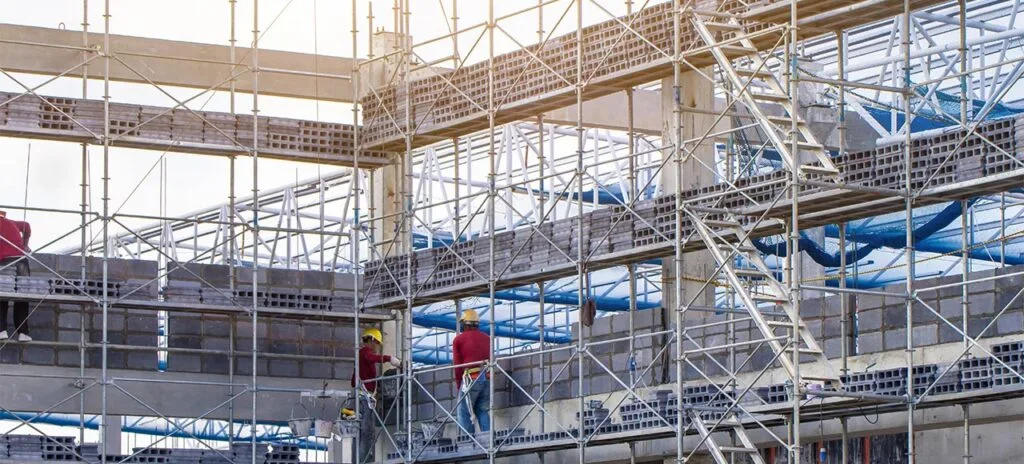
Choosing scaffolding for a construction project requires much more than identifying a familiar system and matching it to a general building type. The scaffold becomes part of the temporary working environment used by crews, tools, materials and access equipment, so its configuration must respond to the actual conditions of the project.
A relatively straight building façade, a high-rise structure, an industrial plant filled with pipes and equipment, and an indoor maintenance project may all require elevated access, yet the most suitable scaffolding solution can be very different in each case. Working height, platform loading, site geometry, ground conditions, frequency of relocation and access requirements all influence the final selection.
This is why effective scaffolding planning begins with the project rather than the product.
For contractors, project managers and international procurement teams, the objective is to create a system that provides appropriate access and working space without introducing unnecessary complexity. At the same time, individual components must work together as a compatible system and satisfy the relevant engineering and safety requirements for the market where the scaffold will be used.
Zichen manufactures a complete range of scaffolding systems and supporting components for building, infrastructure, industrial and maintenance applications. The following guide explains the major factors that should be evaluated before a scaffolding configuration is selected.
Start With the Project, Not the Scaffold Type
One of the most common mistakes in scaffolding selection is deciding on a product before clearly defining the job.
A contractor may be familiar with frame scaffolding and assume that it should be used on every building project. Another business may already own ringlock components and prefer to use them regardless of the construction geometry. Neither approach guarantees that the resulting configuration will be efficient.
Before comparing systems, the project team should establish a basic scaffold brief that answers several questions.
What work will be performed from the scaffold? How high must workers reach? How long is the working area? Will platforms remain in the same position or move regularly? What materials and equipment will be placed on the working levels? Is the building façade straight, curved or irregular? Are there pipes, columns, balconies or machinery that affect the scaffold layout?
These questions define the real operating environment.
For example, a long masonry façade with repetitive working levels may favor a relatively standardized arrangement. A power plant maintenance project involving equipment at several elevations may require considerably greater configuration flexibility. An interior finishing project may prioritize mobility and compact dimensions rather than a large fixed scaffold structure.
The best scaffolding system is therefore the one that solves the project conditions with the least unnecessary complication while maintaining the required safety and structural performance.
Evaluate the Required Working Height
Working height is one of the first parameters that should be established.
A low-level indoor scaffold and a multi-level external scaffold may both provide worker access, but their structural requirements are very different. As scaffold height increases, factors such as bracing, foundation conditions, stability, ties, access and environmental loads become increasingly important.
The project team should distinguish between several measurements:
- Scaffold height
- Platform height
- Required worker reach
- Building height
- Height of different working levels
Confusing these measurements can lead to an inaccurate material list.
For example, if the work itself occurs 12 meters above ground level, the required scaffold arrangement cannot be determined simply by specifying a “12-meter scaffold.” Platform elevation, guardrails, base adjustment, access and the geometry of the work area all need to be considered.
For projects with multiple elevations, a modular ringlock scaffolding system can be useful because standards, ledgers and braces can be configured into different working levels. However, the suitability of any system should still be confirmed according to the actual project design.
Determine the Loads the Scaffold Must Support
Scaffold selection should never be based on height alone.
Working platforms may carry people, tools, materials and equipment. These loads need to be considered when planning the system.
A scaffold supporting painters and lightweight tools is operating under different conditions from one used by masons handling blocks and construction materials. Industrial maintenance can introduce another combination of workers, tools and equipment.
Typical loading considerations include:
| Load Consideration | What Should Be Evaluated |
|---|---|
| Workers | Number of people expected on each working level |
| Materials | Bricks, components, tools or other materials stored temporarily |
| Equipment | Machinery or equipment used from the scaffold |
| Platforms | Number, position and intended use of working decks |
| Environmental forces | Wind and other site-specific conditions |
| Dynamic activity | Movement of workers and materials during operations |
Load capacity should not be estimated casually from the appearance or weight of individual components. It depends on the complete scaffold configuration, including standards, ledgers, braces, platforms, foundations, ties and connections.
For U.S. projects, OSHA specifies that scaffolds and scaffold components must support their own weight and prescribed maximum intended loads, and scaffold use must comply with applicable capacity requirements. The OSHA Scaffolding eTool also identifies load determination and foundation planning as important parts of scaffold preplanning.
For projects in other markets, local regulations and engineering requirements should be checked separately.
Consider the Shape of the Structure
Geometry often determines whether a simple or highly configurable scaffolding system will be more efficient.
Straight façades are relatively easy to accommodate. Once the bay dimensions and platform elevations have been established, a similar configuration may continue across much of the building.
More complicated sites can include:
- Curved façades
- Corners and recesses
- Structural columns
- Balconies
- Tanks and vessels
- Pipe racks
- Machinery
- Bridges
- Changes in elevation
- Restricted access zones
These conditions may favor a modular scaffold because components can be arranged around obstacles and changing geometry.
Ringlock scaffolding is particularly useful in this context because several horizontal or diagonal components can connect around a rosette node. Zichen’s current ringlock scaffolding range includes standards, connection components and supporting parts intended for modular configurations.
Frame scaffolding, by contrast, can be highly efficient when project geometry is repetitive and closely matches the dimensions of the prefabricated frames.
Neither design is automatically superior. The geometry determines which system uses its structural characteristics more effectively.
Fixed or Mobile: Decide Whether the Work Area Will Change

Not every project needs a scaffold to remain in one location.
Maintenance, electrical installation, ceiling work, facility repairs and certain indoor projects frequently require workers to complete one area and then move to another.
In these situations, repeatedly dismantling and rebuilding a fixed scaffold may reduce productivity.
A mobile or rolling scaffold can provide a more practical solution because the working platform can be repositioned within the permitted conditions. Zichen’s mobile scaffolding is designed around movable working access and is presented for applications including industrial facilities, municipal engineering, road and bridge work and power-related construction.
Mobility should not, however, be treated as a reason to ignore stability.
When evaluating a rolling scaffold, project teams should consider:
- Floor or ground condition
- Caster specification
- Wheel locking
- Scaffold height
- Base dimensions
- Outriggers where required
- Obstacles along the movement path
- Overhead hazards
- Access to the working platform
The scaffold should only be moved and used according to the applicable system instructions and safety requirements.
For a project where the working position changes frequently, mobility can provide real operational value. For an exterior scaffold that will remain around a building for several weeks, fixed scaffolding may be more appropriate.
Assess the Ground and Foundation Conditions
Even a high-quality scaffold system cannot perform correctly if it is supported on unsuitable ground.
The scaffold ultimately transfers loads down through the standards and base components into the supporting surface. That surface must therefore be capable of carrying those loads.
Before erection, check whether the location includes:
- Concrete slabs
- Compacted soil
- Uneven ground
- Sloping surfaces
- Soft soil
- Openings or trenches
- Drainage channels
- Finished floors requiring protection
Adjustable base jacks can help accommodate limited variations in elevation, but they do not convert an inadequate foundation into a suitable one.
Ground preparation, sole boards, base plates and other foundation measures may be necessary depending on the scaffold design and local requirements.
OSHA’s scaffolding guidance emphasizes adequate foundations as part of scaffold preplanning and requires supported scaffold poles, legs, posts, frames and uprights to bear on suitable base plates and foundations.
This is one reason procurement teams should provide site information to the scaffold supplier instead of requesting only a generic component quotation.
Choose the Scaffold According to the Work Being Performed
Scaffolding should also be matched to the actual task.
Building Façade and Masonry Work
Façade work often involves long, relatively regular elevations. Workers may need continuous platform access for masonry, rendering, painting, cladding or window-related work.
Frame scaffolding can be effective where the geometry is straightforward and repetitive.
Ringlock can become useful when the façade includes setbacks, complicated corners or changing platform requirements.
High-Rise Construction
High-rise work requires more detailed planning because height increases the importance of ties, bracing, access, loading and environmental conditions.
Modular systems can support systematic expansion, but the configuration must still be designed for the project rather than assumed from the scaffold type alone.
Industrial Facilities
Industrial access can be especially complicated because workers may need to reach equipment located between pipes, tanks, platforms and structural steel.
The ability to change directions and platform elevations can make modular scaffolding valuable in these environments.
Bridge and Infrastructure Work
Bridge construction and infrastructure projects often include irregular structures, changing elevations and large working areas. Scaffold selection may need to respond to project-specific engineering conditions rather than standard building dimensions.
Interior Maintenance
Interior maintenance usually places greater emphasis on compact dimensions, clean mobility and efficient repositioning. Rolling or mobile scaffolding can therefore be more practical than a large fixed system.
The same keyword “scaffolding” can describe equipment used in all of these environments, but the most effective configuration is driven by the task.
Pay Attention to the Working Platform
The platform is where workers actually perform their tasks, so scaffold selection should include platform planning from the beginning.
A working platform needs to provide suitable dimensions, surface characteristics and support for the intended activity.
The project team should evaluate:
- Platform width
- Platform length
- Required working area
- Load requirements
- Anti-slip characteristics
- Connection to the scaffold structure
- Gaps between platform components
- Access points
- Guardrail arrangement
Steel planks are commonly used in construction scaffolding because they can integrate with heavy-duty temporary structures and provide a durable working surface.
Zichen’s steel scaffold plank range is intended for construction working platforms and forms part of the company’s wider scaffold component portfolio.
Platform selection should therefore be considered alongside the supporting scaffold rather than treated as a separate accessory decision.
Do Not Ignore Access Between Working Levels
A scaffold may provide an excellent platform but still create inefficient or unsafe working conditions if workers cannot reach that platform properly.
Access planning can involve:
- Scaffold stairs
- Stair towers
- Internal ladders
- External ladders
- Access gates
- Walkways
The correct arrangement depends on scaffold height, frequency of access, number of workers and local requirements.
If workers are carrying tools or repeatedly moving between several levels, a stair-based solution may offer operational advantages compared with a basic ladder arrangement.
Access should also be incorporated into the scaffold layout before material quantities are finalized. Adding stairs or ladders after the primary system has already been planned can change bay dimensions, platforms and supporting components.
OSHA states that when scaffold platforms are more than 24 inches above or below a point of access, appropriate access such as ladders, ramps, walkways or similar surfaces must be provided under the applicable U.S. requirements.
Review Guardrails and Fall Protection Requirements
Working at height introduces fall hazards, so scaffold selection should include the required protective components.
Depending on the system and local regulations, this may include:
- Top rails
- Midrails
- Toe boards
- Access gates
- Personal fall protection
- Guardrail posts
- Platform edge protection
Guardrails should not be viewed as optional additions that can be considered after the scaffold itself has been selected. They form part of the working configuration.
Different markets may also apply different thresholds and regulatory requirements.
A procurement team buying scaffolding for international projects should therefore establish the destination market early so that the manufacturer understands the relevant system and compliance expectations.
Check Compatibility Between Scaffold Parts
A scaffold is a system of interconnected parts.
Standards, ledgers, braces, platforms, jacks, couplers, frames, casters and other accessories need to function together properly.
A part that appears dimensionally similar is not automatically interchangeable with another manufacturer’s system.
Compatibility should be checked for:
- Tube dimensions
- Connection geometry
- Pin positions
- Rosette configuration
- Platform hooks
- Frame spacing
- Bracing dimensions
- Base components
- Coupler specifications
This becomes especially important when a buyer already owns scaffolding and wants to expand the existing inventory.
Before adding new scaffold parts, provide the supplier with drawings, dimensions, photographs or samples where appropriate. This helps prevent a shipment from arriving on site only to discover that components cannot be integrated into the existing system.
Match the Material to the Application
Steel and aluminum are both widely used in scaffold systems, but they offer different practical characteristics.
Steel provides strength and durability and is commonly used in heavy construction, infrastructure and industrial environments. Surface treatments such as galvanizing are often used to improve corrosion resistance.
Aluminum is lighter and can simplify handling in applications where repeated movement is important.
The choice should be based on the project environment rather than the assumption that one material is universally better.
For example, an industrial contractor building substantial external scaffold structures may prioritize the characteristics of steel. A facility maintenance crew frequently moving a compact access tower across a finished floor may place greater value on lower weight.
Material selection should therefore reflect:
structural needs + handling requirements + operating environment + expected reuse
Consider Erection and Dismantling Efficiency
Equipment efficiency is not determined only by the number of components in the quotation.
The time required to erect, adapt and dismantle scaffolding can affect the overall project schedule.
When comparing systems, consider:
- Number of connection steps
- Weight and size of components
- Repetition of scaffold bays
- Need for frequent modifications
- Crew familiarity
- Component organization
- Access requirements
Frame scaffolding may offer excellent efficiency across a repetitive façade because large prefabricated frames establish the basic geometry quickly.
Ringlock scaffolding may offer stronger efficiency on complex projects because individual modular components can respond to changing geometry without requiring the same amount of improvised adaptation.
For mobile scaffolds, the ability to reposition an assembled platform can reduce repeated erection work where site conditions permit movement.
The correct question is therefore not simply “Which scaffold is fastest to erect?” but rather:
Which system requires the least total labor for the complete project?
Think Beyond the First Project
For contractors, rental businesses and distributors, scaffolding is often used repeatedly.
A system that is ideal for one project but difficult to reuse elsewhere may provide less long-term flexibility than a system suited to a broader range of applications.
When evaluating future use, consider:
- Typical projects your company handles
- Compatibility with existing inventory
- Ability to expand the system
- Availability of replacement scaffold parts
- Storage requirements
- Transportation
- Maintenance
- Local market demand
A contractor specializing in conventional housing may achieve excellent utilization from frame scaffolding.
A company serving industrial, infrastructure and commercial construction may prefer a modular inventory that can be rearranged across many project geometries.
This long-term perspective is particularly important for businesses purchasing large quantities directly from a manufacturer.
Evaluate Storage and Transportation Before Finalizing the System
Scaffolding occupies substantial warehouse and transportation space, especially on large projects.
The component design influences how easily equipment can be:
- Bundled
- Stacked
- Identified
- Loaded into containers
- Unloaded
- Stored on site
- Counted during inventory checks
Frame scaffolding uses comparatively large welded units. Ringlock systems use separate standards, ledgers and braces, which can be grouped according to component type and length. Mobile systems introduce wheels, frames, braces and platform components that need to remain organized.
International buyers should review packaging and labeling requirements before shipment.
A well-planned shipment does more than protect the products. It can make container unloading, quantity verification and site distribution considerably easier.
Establish the Applicable Safety and Compliance Requirements
International scaffold procurement requires attention to destination-market requirements.
Standards and regulations are not identical worldwide, and requirements can depend on the scaffold type, project and jurisdiction.
The Zichen website currently identifies products intended to address requirements across several international markets, while individual project compliance must still be determined according to the destination and actual application.
For U.S.-based construction, OSHA’s scaffold regulations under 29 CFR 1926 Subpart L cover matters including capacity, platforms, access, scaffold use and worker protection. The agency also requires scaffolds and scaffold components to be inspected for visible defects by a competent person before each work shift and after events that could affect structural integrity.
A scaffold supplier can provide product and technical information, but responsibility for complying with local project regulations should remain part of the contractor’s engineering and safety process.
A Practical Scaffolding Selection Matrix
The following matrix provides a simplified starting point for comparing project conditions.
| Project Condition | System Often Worth Evaluating | Main Reason |
|---|---|---|
| Straight building façade | Frame scaffold | Repetitive geometry |
| Complex high-rise layout | Ringlock scaffolding | Modular configuration |
| Industrial equipment access | Ringlock scaffolding | Adapts around obstacles |
| Indoor maintenance | Mobile/rolling scaffold | Easy repositioning |
| Bridge and infrastructure | Modular scaffolding | Flexible layouts and elevations |
| Repetitive masonry | Frame scaffold | Straightforward working bays |
| Frequently changing work area | Rolling scaffolding | Mobility |
| Irregular structural geometry | Ringlock scaffolding | Multi-directional connections |
This table is not a substitute for project design. It is intended to help procurement teams identify which system deserves closer evaluation.
Actual scaffold configuration should be established from dimensions, loading, site conditions and applicable safety requirements.
Information to Prepare Before Contacting a Scaffolding Manufacturer
The quality of a supplier recommendation depends heavily on the information the buyer provides.
Instead of sending only a message such as “We need scaffolding,” prepare a basic project brief.
Useful information includes:
- Project type
- Building or structure dimensions
- Required working height
- Required scaffold length
- Number of working levels
- Estimated platform loads
- Drawings where available
- Site photographs
- Indoor or outdoor use
- Ground conditions
- Required access type
- Destination country
- Applicable standards
- Existing scaffold system, if compatibility is required
- Approximate quantity
- Intended future applications
Providing this information allows the manufacturer to understand the system rather than simply quote individual parts.
For complex requirements, project teams can send scaffold specifications directly to Zichen so the configuration can be discussed around the actual application.
How to Evaluate a Scaffolding Manufacturer
Once the appropriate scaffold type has been identified, the supplier itself should be evaluated.
A B2B scaffolding manufacturer should be assessed across several areas.
Product Range
A broad product range can simplify system integration because scaffold structures often require more than one type of component.
Zichen currently produces scaffolding systems alongside steel props, couplers, steel planks, adjustable jacks, ladders and related accessories.
Manufacturing Process
Buyers should understand how raw materials, cutting, forming, welding, surface treatment, fitting and finished components are controlled.
The manufacturer should be able to provide information relevant to the products being supplied rather than relying only on broad statements about quality.
Component Compatibility
The supplier should confirm that the proposed standards, ledgers, braces, platforms, jacks and accessories form a compatible system.
Technical Communication
Construction procurement often involves drawings, dimensions and system requirements. Clear communication helps prevent misunderstandings before production.
Export Experience
For international projects, packaging, labeling, documentation and container loading can be almost as important as manufacturing the individual scaffold parts.
The objective is to find a supplier capable of supporting the complete procurement process rather than simply providing isolated products.
Common Scaffolding Selection Mistakes
Several mistakes repeatedly create unnecessary problems during scaffold procurement.
The first is choosing solely by unit price. A lower component price has limited value if the system requires more labor, does not match project geometry or cannot integrate with existing inventory.
The second is requesting quantities before completing the layout. Without understanding scaffold height, length, platforms, access and bracing, the material list can easily omit important components.
The third is ignoring the destination market. Equipment intended for one market may need different specifications or documentation when used elsewhere.
The fourth is assuming all scaffold parts are interchangeable. Connection geometry and dimensions should always be verified.
The fifth is focusing only on erection. Dismantling, transport, storage, maintenance and future reuse all contribute to the practical value of the system.
A better purchasing process evaluates the scaffold across its entire working life.
Frequently Asked Questions
How do I choose the right scaffolding for a construction project?
Start by defining working height, project geometry, platform loading, site conditions, mobility, access and applicable safety requirements. Then compare scaffolding systems against those conditions rather than choosing solely by product type.
Is ringlock scaffolding suitable for every project?
No. Ringlock provides excellent modular flexibility, but simpler projects with repetitive geometry may be effectively served by frame scaffolding or another appropriate system. Selection should match the actual job.
When should I use rolling scaffolding?
Rolling scaffolding is useful when workers need to move the working platform regularly, particularly during indoor maintenance, electrical work and other activities performed across multiple locations. Movement and use must follow applicable safety requirements.
What scaffold should be considered for an irregular building?
Modular scaffolding such as ringlock is often worth evaluating because its connections allow different ledgers and braces to be arranged around changing geometry. The final configuration still depends on the actual structure.
Why are scaffold parts important when selecting a system?
The scaffold operates as a complete structure. Standards, braces, platforms, jacks, couplers, guardrails and access components must be compatible and suitable for the intended configuration.
Does working height determine which scaffold I need?
Working height is important but not sufficient on its own. Load requirements, geometry, foundation conditions, access, ties, bracing and environmental conditions also influence scaffold selection.
Should scaffolding be inspected before use?
Yes. Inspection requirements depend on local regulations. Under OSHA rules applicable to U.S. construction, scaffolds and scaffold components must be inspected for visible defects by a competent person before each work shift and after occurrences that could affect structural integrity.
Can I add new components to scaffolding I already own?
Potentially, but compatibility should be verified before combining components. Provide the supplier with system specifications, dimensions, drawings or samples rather than assuming parts will fit because they look similar.
What should I provide to a scaffolding manufacturer before requesting a solution?
Provide project type, dimensions, working height, required platforms, loads, drawings, site conditions, destination market, applicable standards and information about any existing scaffold inventory.
Conclusion
Choosing the right scaffolding requires balancing engineering requirements with the realities of construction work.
There is no single scaffolding system that is ideal for every building, industrial facility or infrastructure project. Frame scaffold can be highly efficient for repetitive façades. Ringlock scaffolding provides valuable flexibility around complex structures. Rolling scaffolding can improve productivity when the working position changes frequently. Platform, access and scaffold parts must then be integrated around the selected system.
The strongest selection process begins by defining where the scaffold will be used, what work will take place on it, what loads it must support and how workers need to access the structure. Only after these conditions are understood should the project team compare scaffold types and component quantities.
Safety requirements should remain part of that process from the beginning. Authoritative resources such as the OSHA scaffolding guidance provide useful information on scaffold planning, hazards and regulatory requirements for applicable U.S. projects.
For contractors and international procurement teams that need more than isolated components, Zichen provides scaffolding systems and related construction support products covering ringlock scaffolding, mobile scaffolding, steel planks, couplers and steel props.
By matching the scaffold to the project instead of forcing the project to match the scaffold, construction teams can create a working system that is more practical to erect, easier to use and better suited to long-term project requirements.