Key Takeaways
- Rolling scaffolding consists of multiple essential components for safety, mobility, and efficiency.
- Each part, from frames to guard rails, plays a critical role in scaffold stability and usability.
- Understanding components aids in proper assembly, maintenance, and compliance with international safety standards.
- Compared with fixed scaffolds, rolling scaffolding saves time and labor, providing flexibility in construction and maintenance projects.
- Choosing high-quality materials and proper dimensions ensures long-term durability and cost-effectiveness.
- Knowledge of standards such as OSHA, EN 1004, and ASTM D-2350 is crucial for safe use.
Introduction
In the fast-paced construction and industrial maintenance environment, efficiency and safety are non-negotiable. Rolling scaffolding has emerged as a critical tool because it combines mobility, stability, and versatility. Unlike fixed scaffolds, rolling scaffolding allows workers to move safely between tasks without disassembling the structure, saving valuable time and labor costs.
According to recent industry surveys, over 60% of medium- and large-scale construction projects now use mobile scaffolding systems, particularly in indoor and renovation projects where mobility and quick setup are essential. Furthermore, advancements in material science, such as aluminum alloys and powder-coated steel, have made rolling scaffolds lighter, more durable, and corrosion-resistant, allowing them to meet both domestic and international safety standards.
This guide dives deep into rolling scaffolding components, their function, maintenance, standards, and best practices for safe use, providing contractors, engineers, and buyers with a thorough understanding to make informed decisions.
Table of Contents
What Is Rolling Scaffolding?
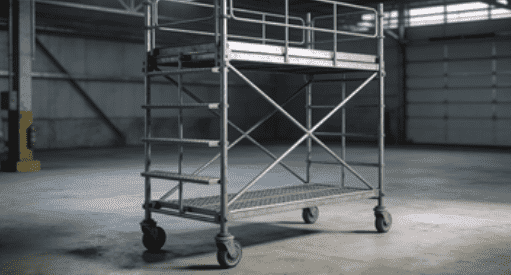
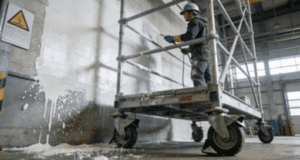
Rolling scaffolding, also called mobile scaffolding, is a type of scaffold mounted on wheels or casters, which allows for easy movement on construction sites or maintenance areas. It is commonly used in painting, electrical work, HVAC installations, and industrial maintenance.
Key Advantages of Rolling Scaffolding
Mobility
The built-in wheels enable easy relocation without disassembly, reducing downtime by up to 40% compared to fixed scaffolding.
Adjustable Height
Many rolling scaffolds allow platform height adjustment, typically from 1.5m to 12m, making them versatile for different tasks.
Safety Compliance
With integrated guard rails, toe boards, and locking casters, rolling scaffolding can comply with OSHA 29 CFR 1926.451, EN 1004, and other regional safety standards.
Versatility
Suitable for both indoor and outdoor use, rolling scaffolds are widely used in commercial, industrial, and residential construction.
Main Components of Rolling Scaffolding
Every component in rolling scaffolding plays a crucial role in structural integrity, worker safety, and operational efficiency. Proper understanding of these parts helps contractors and site managers ensure safe assembly, compliance with international standards, and optimal performance during construction or maintenance work. Rolling scaffolding is widely used in construction, industrial maintenance, warehousing, and even in commercial renovations because of its mobility and adaptability. Below, we break down each major component and explore its specifications, materials, safety requirements, and practical considerations.
1. Scaffold Frame
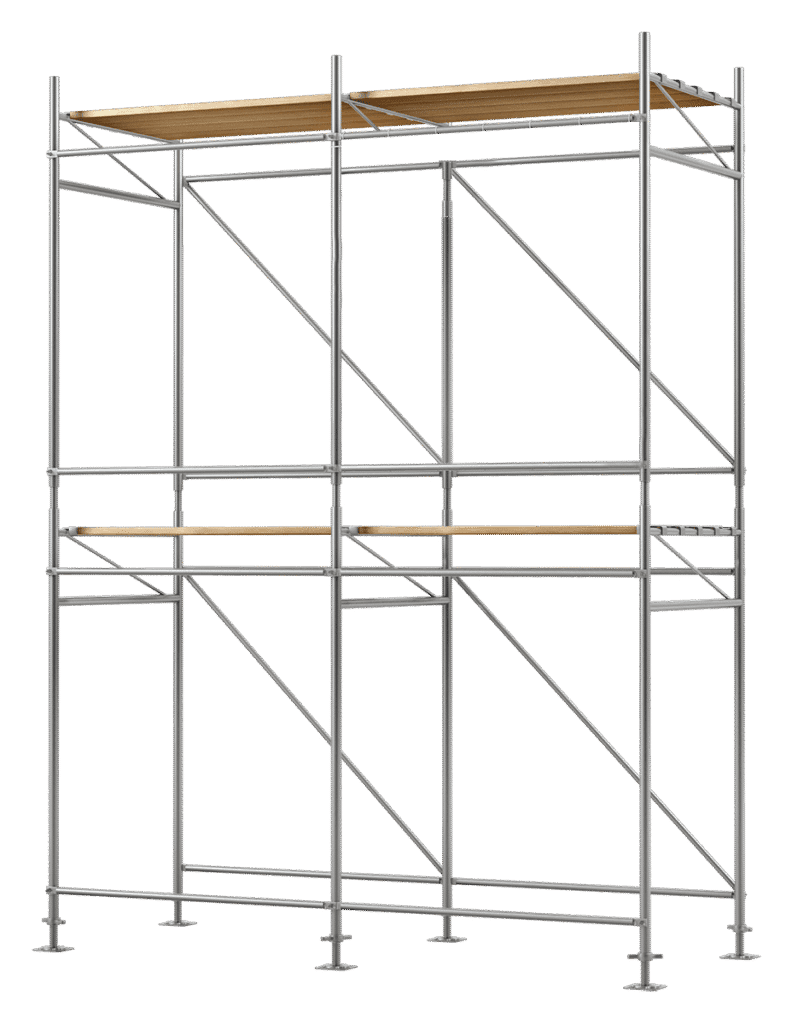
The scaffold frame serves as the primary structural backbone of rolling scaffolding. It supports the platforms, cross braces, guard rails, and other components, ensuring the scaffold can safely carry the weight of workers, equipment, and materials.
Vertical and Horizontal Frames
- Vertical Frames: Determine the scaffold’s working height. They are designed to resist vertical loads from both workers and tools. In taller structures, vertical frames are often reinforced with additional braces to prevent buckling.
- Horizontal Frames: Connect vertical frames and provide lateral stability. They also serve as attachment points for cross braces, guard rails, and platforms.
Material and Strength
- Aluminum Frames: Lightweight (up to 50% lighter than steel), corrosion-resistant, and ideal for indoor use or projects requiring frequent movement. Typical thickness ranges from 1.5–3 mm. Aluminum frames make setup faster and reduce labor fatigue.
- Steel Frames: Heavier and more robust, suitable for outdoor, industrial, or heavy-duty construction projects. Thickness usually ranges from 2–4 mm, ensuring maximum durability and load-bearing capacity. Steel frames are often powder-coated to resist rust and environmental wear.
Practical Tip: For indoor painting or maintenance projects, aluminum frames reduce setup and relocation time. For exterior facade or industrial work, steel frames are recommended for maximum stability and longevity.
2. Platform / Deck
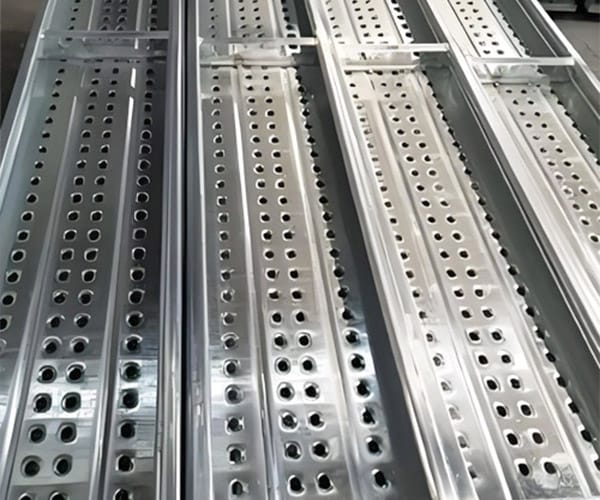
The platform, or deck, is the working surface where personnel operate and tools are placed. Its material, load capacity, and surface design significantly affect safety and efficiency.
Materials
- Wood: Plywood with anti-slip coating is common for lightweight, short-term projects.
- Aluminum: Combines lightweight properties with corrosion resistance, suitable for indoor or portable scaffolds.
- Steel: Used for high load-bearing requirements, often in industrial or outdoor settings where heavy equipment may be present.
Load Capacity
Platforms are rated by Working Load Limit (WLL):
- Light-duty: 150–200 kg/m² – suitable for single-person access and small tools.
- Medium-duty: 200–400 kg/m² – accommodates multiple workers with light equipment.
- Heavy-duty: 400–600 kg/m² – supports several workers and heavy machinery, common in industrial or warehouse applications.
Safety Features
- Anti-slip surfaces reduce accident risks.
- Toe boards prevent tools or materials from falling.
- Platforms should always be checked for wear, cracks, or water damage in wooden decks.
Example: A warehouse refurbishment project using rolling scaffolding with aluminum platforms allowed workers to move equipment between aisles safely while maintaining compliance with EN 1004 standards.duce the risk of accidents.
3. Wheels / Casters
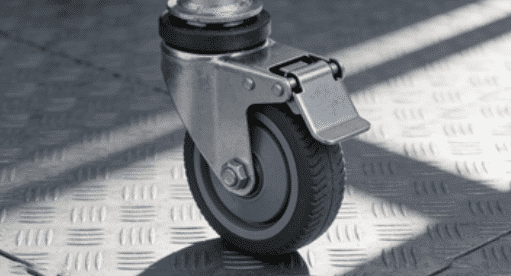
Wheels provide mobility, a defining feature of rolling scaffolding.
Locking Mechanism
- Lockable wheels prevent unwanted movement during use.
- OSHA standards recommend four-point locking systems, ensuring that all wheels are immobilized before workers step onto the platform.
- Some industrial-grade casters include automatic locks that engage when the scaffold is loaded, improving safety without additional manual steps.
Wheel Materials
- Rubber: Provides smooth movement on indoor surfaces and reduces noise.
- Polyurethane: Durable and wear-resistant, ideal for rough or outdoor surfaces.
Size Range: Industrial rolling scaffolds typically use wheels with diameters of 125–200 mm, balancing mobility and load-bearing capacity.
Practical Note: Larger wheels improve mobility on uneven surfaces but require stronger locking mechanisms for safety.
4. Cross Braces
Cross braces are essential components that provide lateral stability and prevent the scaffold from swaying under load or wind pressure. Without properly installed cross braces, rolling scaffolds can become unstable, especially at greater heights.
Diagonal Braces
- Function: Diagonal braces connect the scaffold frames at an angle, creating a rigid triangular structure that resists lateral movement.
- Materials: Typically made from steel or aluminum tubing, often matching the scaffold frame material to ensure uniform strength.
- Installation Tip: Braces must be firmly locked into place and checked regularly for loose pins or deformation, particularly on scaffolds taller than 6 meters, where swaying risk is higher.
- Standards: According to EN 1004, diagonal braces are mandatory for mobile scaffolds above 2 meters in height. They must withstand lateral forces without permanent deformation.
Horizontal Braces
- Function: Horizontal braces connect adjacent frames at the same level, helping distribute vertical and lateral loads evenly across the structure.
- Benefits: They reduce platform vibration and prevent frame separation under heavy loads or uneven terrain.
- Practical Note: For scaffolds used in outdoor renovation projects, horizontal braces also serve as attachment points for guard rails and additional safety equipment.
Example: On a commercial building façade renovation, failure to secure diagonal braces properly caused slight swaying when workers were moving materials on a 7-meter-high scaffold, highlighting the importance of proper brace installation.
5. Guard Rails and Toe Boards
Safety is a critical concern in all scaffold applications. Guard rails and toe boards protect workers from falls and prevent tools or materials from dropping from elevated platforms, which could endanger personnel below.
Guard Rails
- Purpose: Installed along all open edges of the scaffold platform to prevent accidental falls.
- Standard Height: Most safety regulations, including OSHA 29 CFR 1926.451 and EN 1004, specify a guard rail height of 900–1100 mm above the platform.
- Materials: Commonly made of aluminum or steel to match the frame, with corrosion-resistant coatings for outdoor use.
- Practical Tip: Always ensure that guard rails are securely fastened to both the vertical and horizontal frames. Loose rails are a common cause of scaffold-related injuries.
Toe Boards
- Function: Toe boards create a small barrier at the platform edge to prevent tools, equipment, and small materials from sliding off.
- Height: Typically 100–150 mm above the platform surface.
- Best Practices: Toe boards should be installed on all sides where the platform is accessible. For projects involving heavy materials, consider reinforced toe boards or additional netting to catch falling objects.
Case Study: A painting crew on a 5-meter scaffold avoided multiple potential accidents thanks to toe boards and guard rails, proving their essential role in daily site safety.
6. Ladder Access
Ladder access is a critical component that ensures safe and efficient vertical movement between scaffold levels. Both built-in and detachable ladders are used depending on site conditions and scaffold configuration.
Built-In Ladders
- Design: Integrated directly into the scaffold frame for quick access.
- Advantages: Reduces setup time and ensures ladder placement meets safety standards.
- Standards Compliance: Built-in ladders must comply with EN 131 ladder standards for tread spacing, load capacity, and slip resistance.
Detachable Ladders
- Function: Provides flexibility for site-specific needs, such as scaffolds with varying platform heights or irregular placement.
- Installation Tip: Ensure that detachable ladders are locked securely and that angle and footing are stable before climbing.
- Practical Use: Common in warehouses, indoor renovations, or temporary industrial setups where the scaffold must be moved frequently.
Pro Tip: Inspect all ladder rungs for wear, bent frames, or loose fasteners before each use. Non-slip treads and safety handrails enhance security.
7. Base Plates and Outriggers
Base plates and outriggers are critical for scaffold stability, particularly when working on uneven surfaces or at higher elevations.
Base Plates
- Function: Provide a stable foundation and evenly distribute the weight of the scaffold across the ground.
- Material: Usually steel with a flat, wide surface area. Rubber pads may be added to protect flooring in indoor applications.
- Practical Tip: On soft or uneven ground, use base plates with adjustable screw jacks to level the scaffold before use.
Outriggers
- Function: Extendable supports that increase the scaffold’s footprint, reducing tipping risk.
- Usage: Required for rolling scaffolds taller than 6 meters or when supporting heavy loads.
- Standards: EN 1004 specifies minimum outrigger extension and load-bearing criteria to ensure stability under wind or uneven terrain.
Case Example: An industrial maintenance team used outriggers on a 10-meter scaffold to access high machinery safely, preventing tip-over incidents on uneven concrete floors.
8. Connectors and Couplers
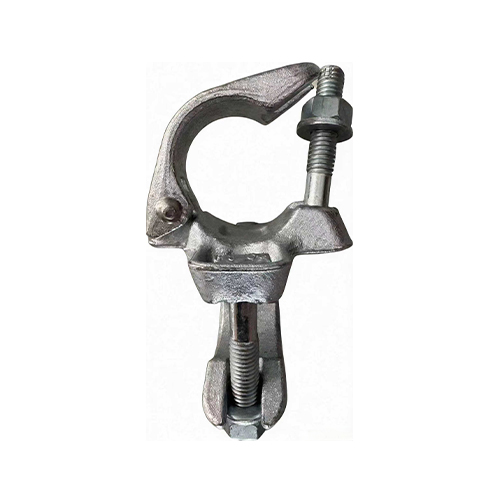
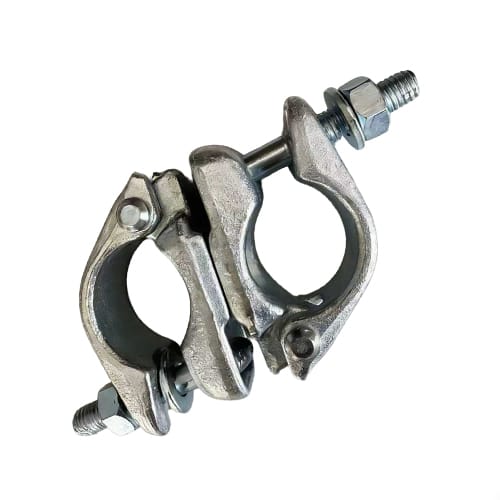
Connectors and couplers are essential for joining scaffold components securely, maintaining structural rigidity while allowing flexible assembly and disassembly.
Quick-Lock Couplers
- Function: Facilitate rapid scaffold assembly and dismantling without compromising safety.
- Advantages: Save significant time on large projects and reduce the risk of human error during manual assembly.
- Application: Typically used to connect frames, braces, and guard rails quickly.
Material and Standards
- Material: High-strength steel, sometimes galvanized or powder-coated for corrosion resistance.
- Load-Bearing Compliance: Must meet ASTM F1147 or EN 1004 requirements for mechanical strength and working load limits.
- Inspection Tips: Couplers should be inspected regularly for wear, rust, or deformation. Faulty couplers are a leading cause of scaffold instability.
Practical Tip: Always use couplers and connectors that match the scaffold manufacturer’s specifications. Mismatched components can create weak points and compromise safety.
Technical Standards for Rolling Scaffolding
OSHA Standards (U.S.)
- 29 CFR 1926.451: Scaffold safety requirements
- Includes guidelines on guard rails, platform load ratings, and wheel locking
EN 1004 (Europe)
- Governs mobile scaffolding design and testing
- Specifies maximum working load, platform height limits, and safety features
ASTM Standards
- ASTM F1147: Performance requirements for rolling scaffolds
- ASTM F1577: Lightweight scaffolds for general construction
Meeting these standards ensures compliance, safety, and reliability.
Typical Rolling Scaffolding Specification Table
| Component | Material | Function | Standard / Notes |
|---|---|---|---|
| Frame | Aluminum/Steel | Supports structure | EN 1004, OSHA |
| Platform/Deck | Wood/Aluminum | Worker standing surface | WLL 150–600 kg/m² |
| Wheels/Casters | Rubber/Polyurethane | Mobility, lockable | Locking required, 125–200 mm diameter |
| Cross Braces | Steel/Aluminum | Structural stability | Diagonal & horizontal |
| Guard Rails | Aluminum/Steel | Fall prevention | 900–1100 mm above platform |
| Ladder Access | Aluminum/Steel | Safe vertical access | Built-in or detachable |
| Base Plates/Outriggers | Steel | Stability, weight distribution | Required for ≥6m scaffolds |
| Connectors/Couplers | Steel | Connect scaffold components | High-strength, quick-lock |
Rolling Scaffolding vs Fixed Scaffolding
| Feature | Rolling Scaffolding | Fixed Scaffolding |
|---|---|---|
| Mobility | Can move easily on wheels | Static, no mobility |
| Setup Time | Fast setup, minimal labor | Longer assembly required |
| Height Adjustment | Adjustable | Limited |
| Stability | Needs locked wheels | Very stable |
| Cost | Moderate, reusable | Lower initial cost |
| Compliance | OSHA/EN standards | Similar standards |
Real-World Applications of Rolling Scaffolding
Construction Projects
- Used for interior painting, drywall installation, and facade maintenance
- Reduces setup time compared to fixed scaffolds
Industrial Maintenance
- Ideal for machinery inspection, electrical installations, and warehouse access
- Lightweight aluminum scaffolds reduce labor fatigue
Case Study: Commercial Renovation
- A 10-story office building renovation used rolling scaffolding for window cleaning and facade work
- Resulted in 30% faster task completion and 20% reduced labor costs
Maintenance Tips for Rolling Scaffolding
- Inspect wheels, locks, and brakes before each use
- Check frames and braces for cracks, bends, or corrosion
- Ensure platforms, guard rails, and connectors are secure
- Lubricate moving parts to maintain smooth operation
FAQ
What are the main parts of rolling scaffolding?
Frames, platforms, wheels, braces, guard rails, ladder access, base plates, and connectors.
How do I safely use rolling scaffolding?
Always lock wheels, secure braces and guard rails, follow OSHA/EN standards, and never exceed load limits.
Can rolling scaffolding be used outdoors?
Yes, but use outriggers and ensure a stable base, especially for scaffolds taller than 6 meters.
How does rolling scaffolding compare to fixed scaffolding?
Rolling scaffolds are mobile and faster to relocate, while fixed scaffolds provide maximum stability for long-term projects.
How often should rolling scaffolding be inspected?
Before each use and regularly for wear, corrosion, or damage to ensure safety and durability.
Conclusion
Rolling scaffolding is a versatile, safe, and efficient solution for construction, industrial maintenance, and renovation projects. Understanding each component—from frames and platforms to guard rails and outriggers—is essential for proper assembly, compliance with standards, and worker safety.
With high-quality materials, adherence to OSHA, EN 1004, and ASTM standards, and proper maintenance, rolling scaffolding can increase productivity, reduce labor costs, and provide a long-lasting solution for mobile access requirements.
Thank you for reading! We hope our insights help you work safely and efficiently with frame scaffolds and other construction equipment. For more updates, tips, and discussions, connect with us on Facebook.
Join our community to stay informed, share experiences, and engage with fellow professionals in the scaffolding industry.