Table of Contents
Introduction
Ringlock scaffolding and frame scaffolding are two widely used systems in modern construction, but they solve different project requirements. Ringlock is valued for its modular connection system, flexible layouts, and ability to adapt to complicated structures, while frame scaffolding is often preferred for straightforward building work where fast repetitive erection and a relatively simple component arrangement are priorities.
For contractors and procurement teams, however, the decision should not be reduced to asking which system is “better.” The more useful question is: which scaffolding system better matches the geometry, workload, schedule, labor conditions, safety requirements, and expected reuse of a specific project?
A system that performs efficiently on a repetitive building façade may be inconvenient around an industrial vessel, curved structure, or complicated access zone. Conversely, a highly configurable modular scaffold may offer capabilities that are unnecessary for a relatively simple low-rise project.
This guide compares ringlock scaffolding vs frame scaffolding from a practical construction and purchasing perspective. We will examine connection methods, flexibility, erection efficiency, structural behavior, transportation, typical applications, cost considerations, and supplier selection so that contractors and international buyers can make a more informed decision.
For a broader view of available systems, buyers can also explore Zichen’s complete scaffolding product range.
What Is Ringlock Scaffolding?

Ringlock scaffolding is a modular scaffolding system built around vertical standards equipped with circular rosettes at regular intervals. Horizontal ledgers and diagonal braces connect to these rosettes using specially designed ledger heads and wedges.
Instead of building the structure through individual tube-and-coupler connections, workers assemble standardized ringlock components into a modular framework.
The main components normally include:
- Vertical standards
- Horizontal ledgers
- Diagonal braces
- Base collars
- Adjustable base jacks
- Steel or other approved working platforms
- Stair and access components
- Guardrails
- Brackets and project-specific accessories
The multi-directional rosette connection is the characteristic feature of the system. Several members can connect around one node, allowing the scaffold to change direction and accommodate varying geometry.
This makes ringlock scaffolding particularly relevant when a project contains changing elevations, corners, irregular building shapes, industrial equipment, bridge structures, or other areas where a basic rectangular scaffold layout is not enough.
Ringlock should therefore be understood as a modular project system, rather than simply another style of scaffold frame.
What Is Frame Scaffolding?
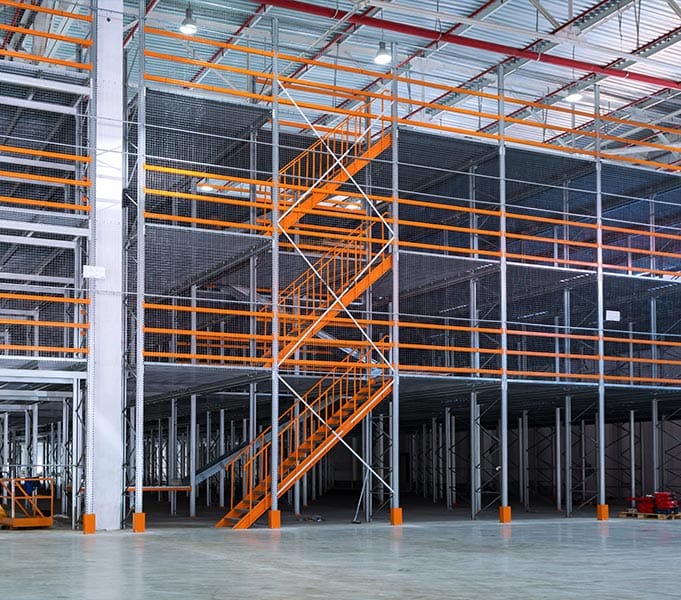
Frame scaffolding uses prefabricated welded frames as its main vertical structural units. Two or more frames are typically connected with cross braces and combined with platforms, base components, guardrails, and other accessories to create a working scaffold.
Its basic configuration is comparatively easy to understand. A repetitive sequence of frames and braces can be extended horizontally and vertically, making frame scaffolding convenient for projects that follow a regular building line.
Typical applications include:
- Residential construction
- Masonry
- Façade work
- Painting
- Plastering
- Exterior finishing
- Renovation
- General building maintenance
Because the main geometry is already built into the prefabricated frames, workers can erect repetitive scaffold bays efficiently when the work area is relatively uniform.
Frame scaffolding is therefore often a practical choice when project geometry is predictable and the primary requirement is to create a straightforward elevated working platform.
Zichen’s broader scaffolding system range includes solutions designed for different building and engineering applications rather than treating one scaffold type as suitable for every job.
Ringlock vs Frame Scaffolding at a Glance
The differences become clearer when both systems are compared against actual construction requirements.
| Comparison Factor | Ringlock Scaffolding | Frame Scaffolding |
|---|---|---|
| Main connection | Rosette, ledger head and wedge | Prefabricated frame and cross brace |
| Layout flexibility | High | Moderate |
| Irregular structures | Strong suitability | Less adaptable |
| Repetitive façade work | Suitable | Very suitable |
| Modular configuration | Extensive | More standardized |
| Direction changes | Easier to accommodate | More limited |
| Component planning | Requires systematic planning | Relatively straightforward |
| Typical projects | High-rise, industrial, infrastructure, complex structures | Residential, façade, masonry, renovation |
| Expansion options | Highly flexible | Best within standard frame geometry |
| Procurement priority | Compatibility and complete system design | Correct frame size and matching accessories |
This table provides a useful overview, but project selection requires deeper analysis. Installation speed, labor familiarity, site geometry, load planning, logistics, and long-term reuse can change the final decision.
Connection Design: The Most Important Difference
The connection method is one of the biggest differences between ringlock and frame scaffolding.
Ringlock scaffolding creates structural nodes through the rosette-and-wedge connection. Ledgers and braces can connect at multiple positions around a vertical standard, allowing the erected scaffold to respond to changing site conditions.
Frame scaffolding takes a different approach. The basic structural shape is incorporated into the welded frame itself. Frames are positioned in sequence and connected by braces, producing a regular scaffold layout.
This means frame scaffolding works particularly well when the building geometry matches the standard bay configuration.
A long, relatively straight building façade is a good example. Repeated frame sections can produce an efficient access platform without requiring the configurability of a more sophisticated modular system.
An industrial facility containing pipes, tanks, structural steel, restricted access zones, and multiple changes of direction presents a very different challenge. In that environment, ringlock’s modular geometry may make it easier to configure working platforms around the structure.
The right connection system therefore depends heavily on the physical environment of the project.
Which System Is Faster to Assemble?
There is no universal answer because installation speed depends on both scaffold design and site conditions.
Frame scaffolding can be highly efficient on simple, repetitive projects. Workers position the frames, install braces and platforms, and continue the same basic arrangement along the work area.
For a regular building façade, this simplicity can be a significant advantage.
Ringlock scaffolding can also be erected efficiently because standardized ledgers and braces connect directly to the rosette system. Its advantage becomes particularly noticeable when the project geometry changes.
Consider two examples.
A contractor needs temporary access along a straight residential façade. Standard frame scaffolding may offer a very efficient erection sequence.
Another contractor needs platforms surrounding columns, process equipment, different elevations, and irregular corners. Frame sections may require additional adaptations, while ringlock components can be configured around the project geometry.
Therefore, installation efficiency should be evaluated as:
assembly speed + adaptation time + modification requirements + dismantling efficiency
rather than simply counting how quickly the first scaffold bay can be erected.
Which Scaffold Offers Greater Layout Flexibility?
For complex geometry, ringlock generally offers more configuration flexibility.
The modular connection system allows contractors to create structures around:
- Corners
- Curved areas
- Irregular façades
- Industrial equipment
- Tanks
- Bridge structures
- Changes in elevation
- Restricted construction zones
Different ledger lengths and bracing arrangements can be selected according to the designed configuration.
Frame scaffolding is more dependent on the dimensions and geometry of the prefabricated frames. This is not a disadvantage when the project matches those dimensions. In fact, standardization is one of the reasons frame scaffolding remains attractive for many conventional building projects.
Problems arise when a contractor attempts to force a relatively rigid system into an extremely irregular structure.
An important procurement principle is therefore:
Do not pay for complexity that the project does not need, but do not choose an overly simple scaffold for a project that requires extensive adaptation.
Structural Stability and Load Planning
Scaffold performance cannot be judged only by the system name.
The actual capacity and stability of an erected scaffold depend on factors including:
- System design
- Component dimensions
- Steel grade
- Manufacturing quality
- Bay dimensions
- Bracing arrangement
- Working height
- Platform loading
- Foundations
- Ties and anchors
- Environmental loads
- Erection quality
This is particularly important for international buyers. Statements such as “ringlock is stronger” or “frame scaffold is safer” are too broad to be useful without specifications and design conditions.
The correct approach is to determine the loads and configuration required by the project and then verify whether the proposed scaffold system is suitable.
For U.S. construction, the OSHA general requirements for scaffolds provide an authoritative reference covering scaffold capacity, foundations, platforms, access, inspection, use, and fall protection requirements.
Professional project teams should also follow the applicable standards, engineering requirements, and local regulations in the country where the scaffold will actually be used.
Which System Works Better for High-Rise Construction?
High-rise construction places greater demands on scaffold planning because the structure may involve:
- Greater working heights
- Repeated vertical expansion
- Wind exposure
- Larger quantities of scaffold components
- Material movement
- More complicated access arrangements
- Multiple working levels
- Longer project duration
Ringlock scaffolding is frequently considered for these projects because modular components can support systematic vertical and horizontal expansion and can be configured around changing building geometry.
Its suitability does not mean every tall project automatically requires ringlock, however. Scaffold configuration must still be designed according to the actual building and loads.
Frame scaffolding may remain appropriate for certain regular façade applications where the system configuration and engineering requirements support its use.
For procurement teams, project height should therefore be considered together with geometry, loading, tie arrangements, working platforms, access, and environmental conditions.
Which System Is Better for Industrial Projects?
Industrial work is one area where flexibility can become particularly valuable.
Industrial facilities may contain:
- Pipe racks
- Pressure vessels
- Tanks
- Machinery
- Structural steel
- Platforms
- Columns
- Restricted access areas
Working surfaces may need to be installed at several different elevations, and the scaffold may need to move around existing plant structures instead of following a straight building line.
These conditions often favor modular scaffolding.
Ringlock scaffolding allows designers to combine standards, ledgers, braces, platforms, brackets, and access components into configurations tailored to the working area.
Frame scaffolding can still be effective in open and regular industrial areas, particularly when simple access platforms are required. However, highly congested environments can reduce the practical advantages of its repetitive frame geometry.
For industrial procurement, site adaptability should usually be considered before initial component price.
Which Is Better for Residential and Façade Construction?
Frame scaffolding remains highly practical for many residential and conventional commercial applications.
Consider a project involving:
- Bricklaying
- Exterior painting
- Rendering
- Window installation
- Façade repair
If workers need relatively uniform access along a straight wall, frame scaffolding offers a simple and recognizable arrangement.
Its prefabricated frames can make project planning straightforward, especially where contractors already use compatible frame sizes and accessories.
Ringlock can perform the same type of work, but its additional configurability may not always deliver enough practical benefit to justify changing an existing frame-based workflow.
For procurement managers, the important question is not which product looks more advanced. It is whether the additional flexibility will create measurable value during installation, use, adjustment, dismantling, or future projects.
Ringlock vs Frame Scaffolding for Labor Efficiency
Labor cost can significantly influence the real cost of scaffolding.
The purchase price of the equipment represents only one part of the economic calculation. Buyers should also evaluate:
- Number of workers required for erection
- Installation time
- Time needed for modifications
- Dismantling time
- Sorting and handling
- Training and familiarity
- Reuse across different projects
A contractor whose crews have extensive experience with frame scaffolding may achieve very high efficiency on standard building projects.
A contractor working across varied infrastructure or industrial sites may receive greater long-term value from ringlock because the same modular inventory can be reorganized into many layouts.
This is why two contractors can evaluate the same scaffolding systems and reasonably reach different purchasing decisions.
The correct comparison is based on the buyer’s total project workflow, not just the equipment invoice.
Transportation, Storage and Site Logistics
Large scaffolding orders require substantial transportation and storage planning.
Frame scaffolding consists of relatively large welded frame units. The shape is convenient during erection but influences stacking and container planning.
Ringlock scaffolding is composed of separate standards, ledgers, braces, and accessories. These components can be sorted by type and length, but the buyer needs an organized inventory system to avoid component shortages on site.
For both systems, good logistics management should include:
- Component identification
- Quantity records
- Appropriate bundles or racks
- Protection during transportation
- Separate storage of small accessories
- Inspection after repeated use
International buyers should discuss packaging and container loading with the manufacturer before shipment, particularly for large project orders.
The objective is not simply to place as much steel as possible in one container. Components should arrive organized enough to support efficient unloading, inventory checks, and site deployment.
Maintenance and Reusability
A scaffold system is a reusable construction asset, so long-term condition matters.
Routine inspection should look for issues such as:
- Bent components
- Cracked welds
- Significant corrosion
- Damaged connection points
- Deformed braces
- Damaged platforms
- Missing locking components
Parts that are damaged or no longer meet the required condition should not simply be returned to service.
OSHA requires scaffolds and scaffold components to be inspected for visible defects by a competent person before each work shift and after events that could affect structural integrity. International buyers should also follow the regulations applicable in their local market.
A quality purchasing decision should therefore consider product durability, surface treatment, replaceable parts, system compatibility, and future availability—not only initial cost.
Ringlock vs Frame Scaffolding Cost: Which Is Cheaper?
Frame scaffolding may appear more economical for some standard projects because it has a straightforward structure and does not necessarily require the same variety of modular components.
Ringlock systems can involve a larger combination of standards, ledgers, braces, bases, platforms, and accessories.
However, initial purchase price is not the same as total ownership cost.
A more useful comparison includes:
| Cost Factor | Why It Matters |
| Initial purchase | Determines upfront investment |
| Installation labor | Influences every erection cycle |
| Modification time | Important on changing sites |
| Transport | Affects domestic and international logistics |
| Component replacement | Influences maintenance budget |
| Reuse flexibility | Determines how many future projects can use the inventory |
| Service life | Affects long-term equipment value |
| Project downtime | Can exceed differences in scaffold price |
A distributor buying standard scaffolding for a relatively predictable customer base may prioritize a common frame format.
A contractor handling bridges, industrial plants, commercial developments, and unusual structures may value the greater configuration flexibility of ringlock scaffolding.
The lower-cost choice should therefore be calculated across the expected lifetime of the equipment.
How to Decide Which Scaffold System Your Project Needs
Before sending an RFQ to a scaffolding supplier, prepare basic project information.
Useful information includes:
- Type of project
- Required working height
- Approximate scaffold length and width
- Building or structure geometry
- Required working levels
- Expected platform loads
- Ground conditions
- Access requirements
- Indoor or outdoor environment
- Planned project duration
- Local standards or specifications
- Required quantities
- Future reuse expectations
Providing these details allows the manufacturer to make a more relevant recommendation and reduces the risk of receiving a quotation based only on generic component prices.
For complex projects, drawings or layout information can be especially useful.
When Should You Choose Ringlock Scaffolding?
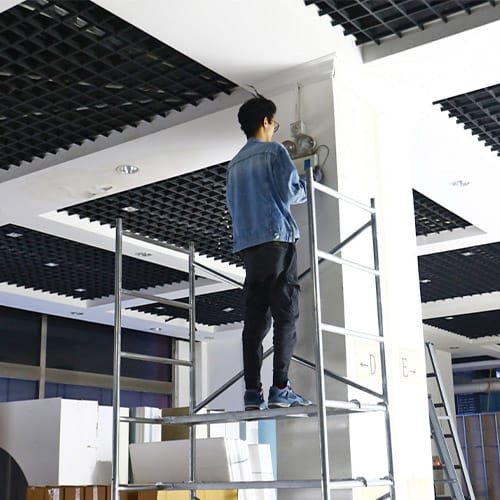
Ringlock scaffolding is generally worth considering when the project requires:
- Complex geometry
- Frequent changes of direction
- Multiple platform elevations
- Modular expansion
- Industrial access
- Infrastructure construction
- High-rise applications
- Flexible reuse across different projects
It can also make sense for contractors building a standardized modular scaffold inventory intended for multiple project types.
Buyers evaluating this option can review Zichen’s ringlock scaffolding range to understand available system components.
When Should You Choose Frame Scaffolding?
Frame scaffolding can be a strong choice when:
- The façade is relatively straight
- Construction bays are repetitive
- Project geometry is predictable
- Crews are experienced with frame systems
- Simple erection is a priority
- Residential or conventional commercial work dominates the project portfolio
The system’s simplicity should not be mistaken for lower professional value. In the right application, standardization can be an advantage because it reduces unnecessary complexity.
The key is to ensure frame dimensions, braces, platforms, bases, access components, and other accessories form a compatible system suitable for the intended project.
Safety Should Not Depend on Scaffold Type Alone
Neither ringlock nor frame scaffolding becomes safe simply because of its connection design.
Safe use depends on the entire process:
- Correct scaffold selection
- Appropriate engineering or design where required
- Suitable foundations
- Compatible components
- Correct erection
- Required ties and bracing
- Safe platforms and access
- Fall protection
- Load control
- Inspection and maintenance
The OSHA scaffolding standards under 29 CFR 1926 Subpart L provide useful regulatory information for projects subject to U.S. rules.
For projects outside the United States, contractors should verify the applicable national and regional requirements rather than assuming that one country’s rules automatically satisfy another market.
What International Buyers Should Check Before Ordering
For overseas procurement, product type is only part of supplier evaluation.
A buyer should also examine:
Product Compatibility
Scaffold components need to work together as a system. Mixing incompatible dimensions or connection designs can create serious problems.
Material and Manufacturing Information
Ask the supplier to clarify relevant material specifications, dimensions, welding, surface treatment, and inspection procedures.
Project Requirements
A professional quotation should relate to the intended application rather than simply providing a generic price per component.
Quality Control
Buyers should understand how raw materials, welding, dimensions, trial assembly, surface treatment, and finished components are checked.
Packaging and Export Support
Large scaffolding shipments require proper bundling, component identification, container planning, and documentation.
Long-Term Supply
If a contractor plans to reuse the system, the future availability of compatible replacement components becomes important.
Zichen presents its scaffolding products and manufacturing process for buyers evaluating different system options.
Why Work With a Scaffolding Manufacturer Rather Than Compare Price Alone?
B2B scaffolding procurement differs from buying a simple standardized item.
A large project may involve hundreds or thousands of interconnected parts. A quotation that is slightly cheaper can become expensive if:
- Important accessories are missing
- Components are incompatible
- Dimensions do not match project drawings
- Packaging complicates site handling
- Replacement components are difficult to obtain
- The selected system is inefficient for the application
This is why serious procurement usually begins with project requirements rather than a request for the lowest unit price.
A capable manufacturer should help the buyer translate construction requirements into an appropriate component list and system configuration.
Buyers who need assistance evaluating quantities or scaffold types can contact Zichen about project requirements before finalizing an order.
Frequently Asked Questions
Is ringlock scaffolding better than frame scaffolding?
Not in every situation. Ringlock offers greater configuration flexibility and is particularly useful for complex construction, infrastructure, industrial work, and projects with changing geometry. Frame scaffolding can be more straightforward and efficient for repetitive façades, residential construction, and conventional building work.
What is the main difference between ringlock and frame scaffolding?
The main difference is the structural connection method. Ringlock uses modular standards with rosettes connected to ledgers and braces, while frame scaffolding uses prefabricated welded frames joined mainly through bracing and other matching components.
Which scaffolding is easier to install?
Frame scaffolding can be very fast on regular, repetitive projects. Ringlock also provides efficient modular assembly and can reduce adaptation work on complicated structures. Actual installation efficiency depends on project geometry and crew experience.
Is ringlock scaffolding suitable for high-rise buildings?
Ringlock systems are widely considered for high-rise and complex construction because their modular design can support flexible layouts. The actual scaffold must still be designed and configured according to the project, loads, working height, applicable standards, and site conditions.
Is frame scaffolding suitable for commercial construction?
Yes. Frame scaffolding is commonly suited to residential and commercial projects, particularly façade work, masonry, painting, renovation, and other applications with repetitive working areas.
Which scaffolding is better for industrial plants?
Ringlock scaffolding often provides an advantage in industrial environments because it can adapt to tanks, pipes, equipment, structural steel, and irregular access areas. The final choice depends on the specific plant layout and required working platforms.
Which system is cheaper?
Frame scaffolding may have a lower upfront cost in some conventional applications, but procurement teams should compare total cost, including labor, modification time, transportation, maintenance, reuse, and future project flexibility.
Can ringlock and frame scaffolding components be mixed?
Scaffolding components should only be used in configurations that are confirmed to be compatible and suitable for the designed system. Buyers should not assume components from different systems or manufacturers are interchangeable simply because dimensions appear similar.
What information should I send when requesting a scaffold quotation?
Provide the project type, working height, building dimensions, approximate scaffold area, required loads, drawings where available, access requirements, local standards, quantities, project schedule, and destination. More complete information usually allows the supplier to prepare a more useful quotation.
Conclusion
The ringlock scaffolding vs frame scaffolding decision should be based on project conditions rather than a simple ranking of one system over another.
Ringlock scaffolding stands out when contractors need modularity, multi-directional connections, adaptability, and the ability to configure scaffolding around complicated structures. This makes it particularly attractive for high-rise construction, industrial plants, infrastructure, bridges, and projects where working geometry changes frequently.
Frame scaffolding remains highly practical for repetitive building work. Its prefabricated structure can provide an efficient solution for masonry, façades, renovation, painting, and conventional residential or commercial construction where the required scaffold layout is relatively predictable.
For buyers, the strongest decision comes from balancing project geometry, structural requirements, erection labor, system flexibility, logistics, initial investment, and long-term reuse.
Instead of selecting scaffolding on unit price alone, contractors should define how the system will actually be used throughout the project and across future jobs.
Zichen supplies multiple scaffolding system solutions for different construction environments. If you are comparing ringlock, frame, mobile, or other scaffold configurations for an upcoming project, send your requirements to Zichen to discuss a suitable system and component configuration.