Table of Contents
Introduction
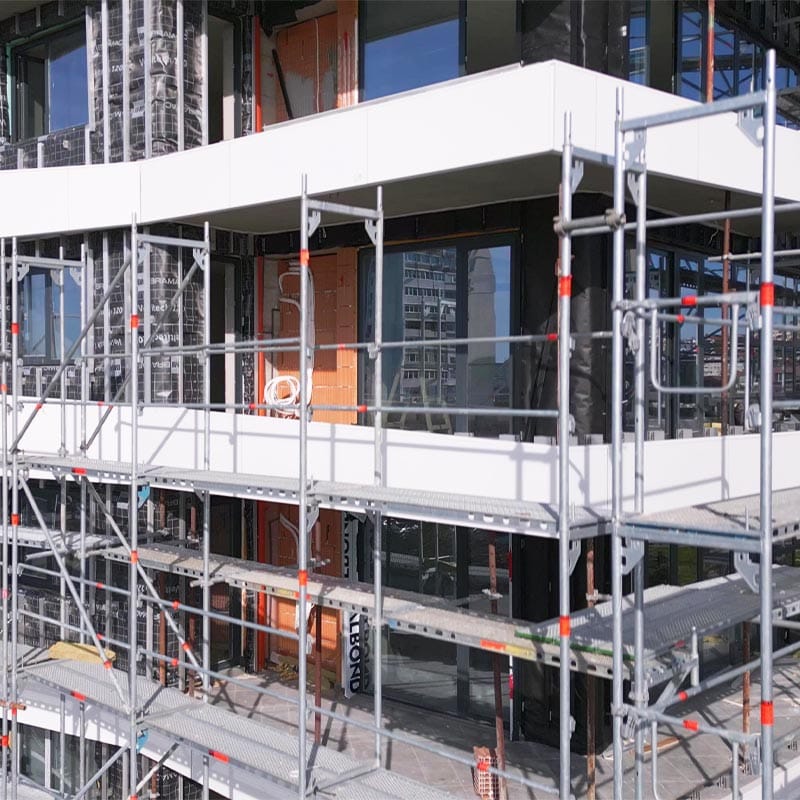
Scaffolding construction is an essential part of modern building and maintenance projects. It provides a temporary, elevated platform that allows workers to safely access hard-to-reach areas. From high-rise buildings to industrial facilities, scaffolding ensures that tasks at height are completed efficiently and safely. According to construction safety reports, properly installed scaffolding can reduce fall-related incidents by over 60%, highlighting its critical role in workplace safety.
This guide will cover the types, materials, safety considerations, and best practices in scaffolding construction, offering a comprehensive resource for construction professionals and project managers.
What Is Scaffolding Construction?
Scaffolding construction involves assembling temporary structures that support workers, tools, and materials at elevated heights. Unlike ladders, scaffolding provides a wide, stable platform and allows multiple workers to operate simultaneously.
A basic scaffolding system includes:
- Vertical supports (standards)
- Horizontal supports (ledgers)
- Working platforms or planks
- Guardrails and toe boards for safety
Proper scaffolding construction ensures stability, load-bearing capacity, and compliance with occupational safety standards.
Types of Scaffolding Construction
There are several scaffolding systems commonly used in construction:
Supported Scaffolding
The most traditional type, supported scaffolding, consists of vertical and horizontal components. It is ideal for long-term projects and can carry heavy loads.
Mobile Scaffolding
Equipped with caster wheels, mobile scaffolding allows easy repositioning on flat surfaces. It is suitable for indoor tasks or situations requiring frequent movement.
Suspended Scaffolding
Suspended scaffolding hangs from a structure using ropes or chains. It is widely used for exterior building work like painting and window cleaning.
System Scaffolding
Prefabricated modular scaffolding allows quick assembly and disassembly. It is highly adaptable to complex structures and reduces setup time.
Materials Used in Scaffolding Construction
Scaffolding materials influence stability, durability, and load capacity:
| Material | Advantages | Common Uses |
|---|---|---|
| Steel | High strength, long-lasting, supports heavy loads | High-rise buildings, industrial projects |
| Aluminum | Lightweight, corrosion-resistant | Indoor work, temporary installations |
| Wood | Low cost, easy to work with | Short-term projects, renovation work |
Selecting the right material depends on project duration, load requirements, and environmental conditions.
Key Benefits of Proper Scaffolding Construction
- Enhanced Safety: Guardrails and stable platforms minimize fall risks.
- Improved Efficiency: Workers can move freely and transport tools across platforms.
- Versatility: Scaffolding can be customized for different heights, shapes, and tasks.
- Durability: Quality materials withstand heavy loads and harsh environments.
Construction experts report that using well-constructed scaffolding can improve project completion speed by 20–30% compared to relying solely on ladders or temporary platforms.
Safety Guidelines for Scaffolding Construction
Proper scaffolding construction is critical to preventing accidents. Key safety measures include:
- Ensuring vertical supports are fully plumbed and stable
- Installing guardrails and toe boards on all platforms
- Verifying load limits and not overloading the structure
- Conducting daily inspections before work begins
- Using personal protective equipment (PPE) when on platforms
Following these guidelines significantly reduces the risk of falls, structural failure, and work-related injuries.
Common Mistakes in Scaffolding Construction
Even experienced workers can make errors that compromise scaffolding safety:
- Skipping guardrails or toe boards
- Using damaged or substandard materials
- Overloading the platform with workers or tools
- Improper leveling of the base
- Failing to secure connections and braces
Addressing these issues during assembly and maintenance is critical to maintaining a safe working environment.
When to Use Scaffolding vs Ladders
While ladders are suitable for quick, low-height tasks, scaffolding is necessary for longer-duration work, heavy loads, and multiple workers. Choose scaffolding when:
- The task requires hands-free operation
- Multiple workers need simultaneous access
- Equipment and materials must be transported along the platform
- The work duration is extended or repetitive
For short or simple tasks, ladders may suffice, but scaffolding ensures safety and efficiency in most professional construction scenarios.
Maintenance and Inspection of Scaffolding
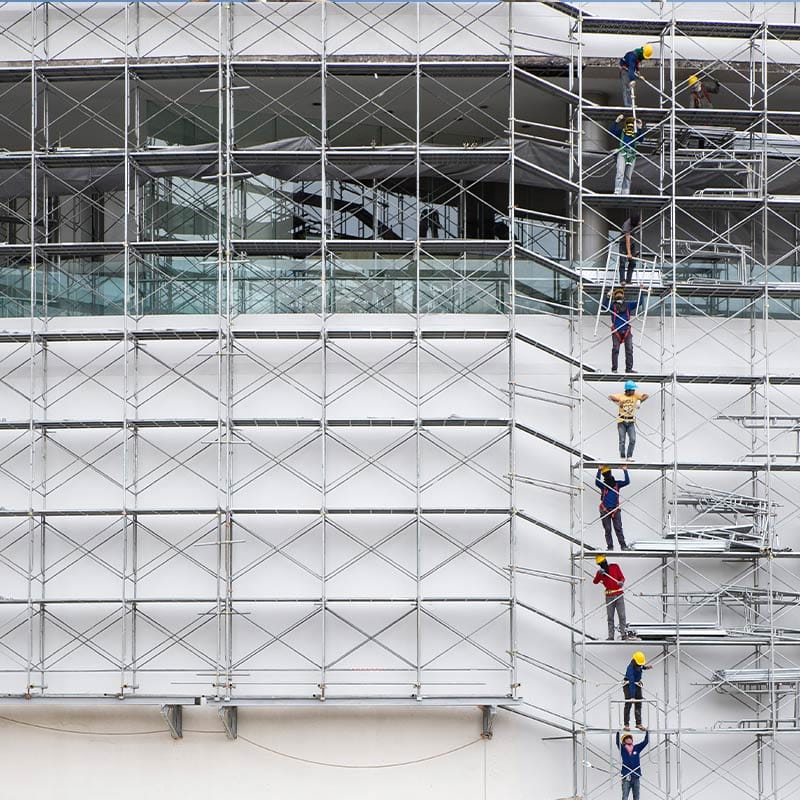
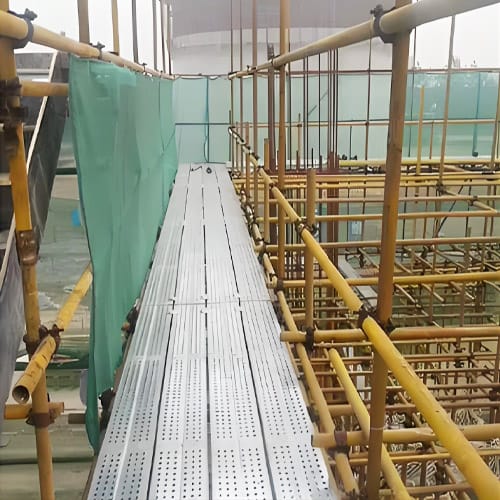
Regular maintenance extends the life of scaffolding and ensures safety:
- Inspect connections, joints, and fasteners before each use
- Check for corrosion or damage in metal components
- Replace worn planks or braces promptly
- Ensure caster wheels (for mobile scaffolding) lock properly
A structured maintenance schedule is crucial for high-use construction sites to prevent accidents.
Conclusion
Scaffolding construction is a cornerstone of safe and productive elevated work. By understanding different types, materials, and safety protocols, construction teams can improve efficiency, reduce risks, and meet regulatory standards. Properly assembled scaffolding is not just a convenience—it’s a necessity for professional, reliable construction projects.
FAQ
What is scaffolding construction?
Scaffolding construction involves assembling temporary structures to support workers, tools, and materials at height. It provides a stable platform for tasks like painting, building, or maintenance, ensuring safety and efficiency on construction sites.
What are the main types of scaffolding construction?
Common types include supported scaffolding, mobile scaffolding, suspended scaffolding, and system scaffolding. Each type is designed for specific heights, workloads, and project durations, offering different levels of stability and mobility.
What materials are used in scaffolding construction?
Steel, aluminum, and wood are the most common materials. Steel offers high strength, aluminum is lightweight and corrosion-resistant, and wood is cost-effective for short-term projects. Material choice depends on load, duration, and environmental factors.
How do I ensure scaffolding construction is safe?
Safety requires proper assembly, guardrails, level base, load compliance, and daily inspections. Workers should wear personal protective equipment, and all connections and braces must be secure to prevent falls and structural failure.
When should scaffolding be used instead of ladders?
Scaffolding is preferred for long-duration, high-risk, or multi-worker tasks where stability and hands-free operation are needed. Ladders are suitable only for quick, low-height tasks with minimal tools and short work periods.
Need Help Choosing the Right Scaffolding Construction System?
If you’re unsure which scaffolding type is best for your project, our experts are here to help. Contact us today for a personalized consultation, and ensure your elevated work solution is safe, stable, and fully compliant. Don’t wait until it’s too late—get in touch now to protect your workers and your project!