
Table of Contents
Introduction
Working at height remains one of the most critical risk areas across construction, maintenance, and industrial operations. Falls from elevation continue to account for a significant portion of workplace incidents. According to global construction safety reports and data published by occupational safety organizations, fall-related accidents consistently rank among the top causes of injuries in elevated work environments.
This is why choosing the right access equipment is not just a matter of convenience, but a core safety decision. Two of the most commonly used solutions are movable scaffolding systems and ladders. While both serve the purpose of reaching elevated areas, their safety performance, stability, and usability differ significantly.
If you are deciding between a movable scaffolding and a ladder, understanding these differences can directly impact worker safety, productivity, and project outcomes.
What Is a Mobile Scaffold?
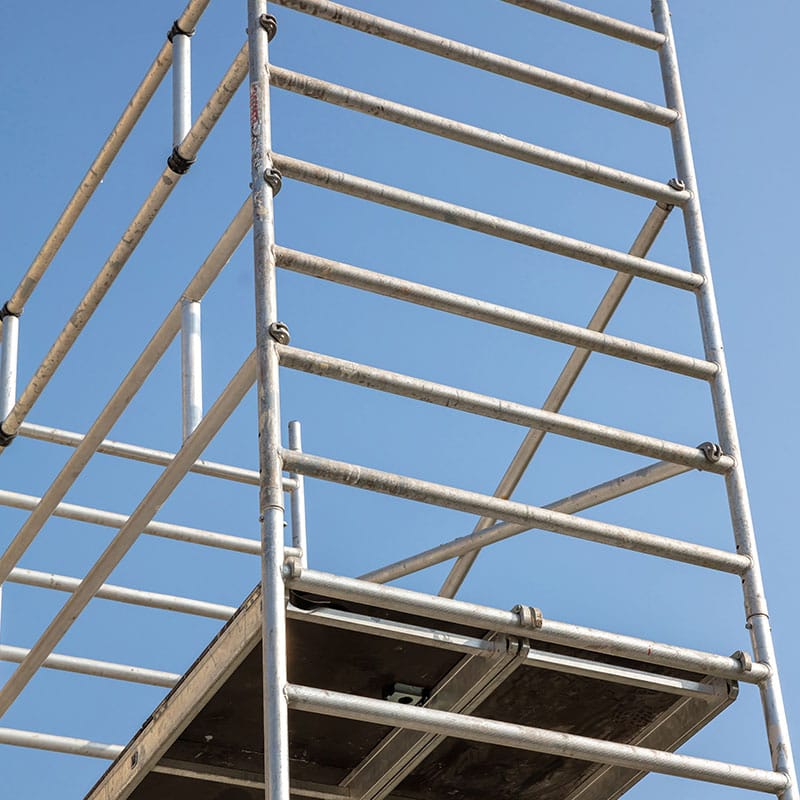
A movable scaffolding is a movable elevated work platform designed with a stable structure, wide working surface, and integrated mobility features such as caster wheels. It typically includes vertical frames, horizontal braces, platforms, guardrails, and locking wheels.
The key advantage of a movable scaffolding is that it provides a secure working platform where operators can stand, move, and perform tasks comfortably. Unlike fixed scaffolding, it can be repositioned without dismantling, making it highly efficient for projects requiring frequent movement.
Movable scaffolding systems are widely used in painting, installation, maintenance, and inspection tasks where both height and mobility are required.
What Is a Ladder?
A ladder is a simple vertical access tool designed for short-duration tasks. It allows users to climb to a specific height but does not provide a stable working platform in the same way a movable scaffolding does.
Common types include step ladders, extension ladders, and multi-purpose ladders. While ladders are lightweight and easy to transport, they are limited in terms of stability, load capacity, and working comfort.
Ladders are generally used for quick access tasks rather than extended work at height.
Mobile Scaffold vs Ladder: Key Differences
The fundamental difference between a movable scaffolding and a ladder lies in stability and usability.
A movable scaffolding offers a large, flat working platform with guardrails, allowing workers to move freely and use tools safely. A ladder, in contrast, requires the user to maintain balance while standing on narrow rungs, which increases fatigue and risk.
Mobility is another factor. While ladders are portable, they must be repositioned manually. Movable scaffolding systems can be rolled into position, saving time and effort.
Load capacity also differs. Movable scaffolding systems are designed to support multiple workers and tools, whereas ladders typically support only one person with limited additional weight.
Safety Comparison Between Mobile Scaffold and Ladder
From a safety perspective, movable scaffolding systems offer a clear advantage in most scenarios.
They include built-in guardrails that provide fall protection, reducing the likelihood of accidental slips. The wide platform improves balance and allows for safer tool handling.
Ladders, on the other hand, rely heavily on user stability and proper positioning. The risk of tipping, slipping, or losing balance is higher, especially during prolonged tasks.
Research in occupational safety publications indicates that ladder-related incidents are often linked to improper use, overreaching, or unstable positioning. In contrast, scaffold-related risks are more commonly associated with improper assembly rather than inherent design limitations.
Efficiency and Productivity Considerations
Efficiency is another area where movable scaffolding systems outperform ladders.
With a movable scaffolding, you can work continuously without frequently repositioning your access equipment. This reduces downtime and improves workflow efficiency.
Ladders require constant repositioning, especially when working across a wider area. This not only slows down the process but also increases physical strain on workers.
For longer tasks, a movable scaffolding provides a more ergonomic working environment, allowing workers to maintain productivity without excessive fatigue.
Mobile Scaffold vs Ladder Comparison Table
| Factor | Mobile Scaffold | Ladder |
|---|---|---|
| Stability | High, with wide platform and guardrails | Low to moderate, depends on user balance |
| Safety | Built-in fall protection | Limited protection |
| Load Capacity | Supports multiple users and tools | Typically one user only |
| Mobility | Easy repositioning with wheels | Manual repositioning required |
| Efficiency | Suitable for long-duration tasks | Best for short tasks |
| Cost | Higher initial investment | Lower initial cost |
This comparison highlights that the right choice depends on the nature of the work rather than price alone.
When to Use a Mobile Scaffold
A mobile scaffold is the best choice when the task involves extended work at height, requires stability, or involves handling tools and materials.
It is particularly effective in indoor maintenance, large surface finishing, and projects where workers need to move along a horizontal area while staying at the same height.
If safety and productivity are priorities, a mobile scaffold is often the more reliable solution.
When to Use a Ladder
A ladder is suitable for quick, low-risk tasks that require minimal time at height. It is ideal for situations where space is limited or where the work area is easily accessible.
However, ladders should not be used for prolonged tasks or situations that require frequent movement or handling of heavy tools.
How to Choose Between a Mobile Scaffold and a Ladder
To choose the right solution, you should evaluate several factors.
Consider the height and duration of the task. Longer and higher tasks generally require a mobile scaffold. Assess the working environment, including surface conditions and available space.
Safety requirements should always be the top priority. If there is any doubt about stability or fall risk, a mobile scaffold provides a more secure alternative.
Budget is important, but it should not outweigh safety considerations. Investing in the right equipment can prevent costly incidents and improve overall efficiency.
Common Mistakes to Avoid in Elevated Work Equipment Selection

One common mistake is choosing equipment based solely on cost without considering safety and usability. Another issue is underestimating the duration or complexity of the task.
Using a ladder for work that requires stability and extended time can significantly increase risk. Similarly, failing to properly assemble or secure a mobile scaffold can compromise its effectiveness.
Regular inspection and proper usage are essential for both systems.
Conclusion
Both mobile scaffold systems and ladders have their place in elevated work, but they serve different purposes. Ladders are useful for quick access tasks, while mobile scaffold systems provide a safer and more efficient solution for extended work at height.
If your goal is to improve safety, reduce fatigue, and increase productivity, a mobile scaffold is often the better investment. By understanding the strengths and limitations of each option, you can make a decision that supports both operational efficiency and worker protection.
FAQ
What is a mobile scaffold used for?
A mobile scaffold is used for elevated work such as construction, maintenance, painting, and installation, where safe access and mobility are required.
Is a mobile scaffold safer than a ladder?
Yes, a mobile scaffold is generally safer because it provides a stable platform with guardrails, reducing the risk of falls during extended work.
What materials are mobile scaffolds made of?
Mobile scaffolds are typically made from aluminum or steel, offering a balance between lightweight mobility and structural strength.
How do you move a mobile scaffold safely?
A mobile scaffold should be moved on a flat surface with no workers or materials on it, and the wheels should be unlocked before repositioning.
What is the load capacity of a mobile scaffold?
The load capacity varies by design, but most mobile scaffolds are built to support workers, tools, and materials within specified safety limits.
Need Help Choosing the Right Mobile Scaffold?
If you’re unsure which mobile scaffold system is best for your project, our experts are here to help. Contact us today for a personalized consultation, and ensure your elevated work solution is safe, efficient, and fully compliant with industry standards. Don’t take risks at height—get in touch now to protect your team and improve your project performance!