Welcome to the Cangzhou Zichen Building Materials blog! As a leading manufacturer specializing in the R&D, production, and export of construction equipment, we are dedicated to sharing expert knowledge, practical tips, and industry insights. Whether you work with mobile scaffolding, ringlock scaffolding, or adjustable steel props, our goal is to help you improve safety, efficiency, and project quality. Keep reading to explore essential practices and advice for scaffold users at every level.
Table of Contents
Key Points Covered in This Blog
- Comprehensive overview of major types of scaffolding and their engineering applications
- Comparison of load capacity, safety, and cost-effectiveness
- Standards, certifications, and safety regulations for scaffolding
- Real-world case studies and project examples
- Selection guidelines for contractors and construction managers
- Maintenance best practices and lifecycle cost analysis
- FAQ addressing common questions from modern construction professionals
Introduction
Scaffolding is a critical temporary structure in construction, industrial maintenance, and infrastructure projects. Proper selection and installation of scaffolding systems ensure worker safety, operational efficiency, and structural stability.
With urbanization accelerating globally and high-rise projects becoming more common, construction professionals increasingly rely on types of scaffolding that meet both regulatory compliance and engineering performance standards. According to the 2026 Global Construction Equipment Report, scaffolding market demand is projected to grow 8.2% CAGR over the next five years, driven by infrastructure expansion and urban redevelopment projects.
In this guide, we explore the technical, operational, and economic aspects of scaffolding systems, with insights from engineering standards, real-world case studies, and modern construction practices.
Engineering Classification of Scaffolding Systems
Supported Scaffolding: The Backbone of Construction
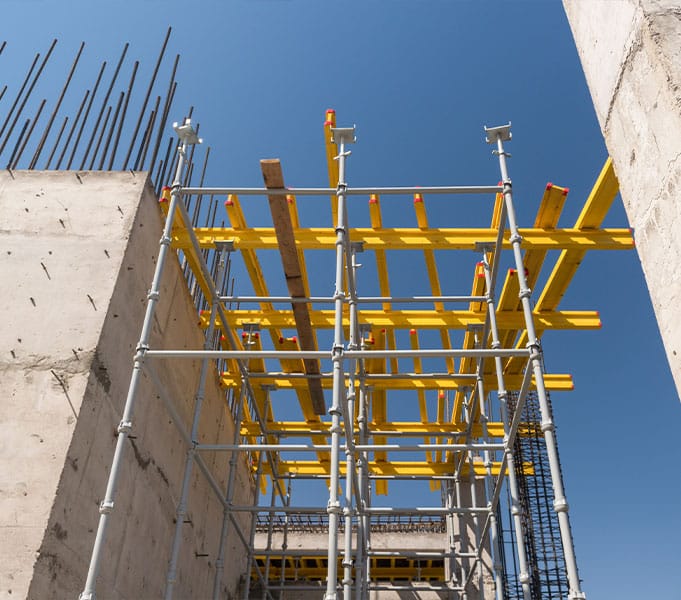
Supported scaffolding is built from the ground up with vertical standards, horizontal ledgers, and base support.
Technical Characteristics
- Load capacity: up to 750 kg/m² depending on frame design
- Modular height adaptability: up to 50 meters in high-rise applications
- Material: typically galvanized steel or aluminum alloy
Typical Applications
- Building façade finishing
- Masonry and brickwork
- Painting and plastering
Case Study: The construction of Shanghai Tower (632m) utilized supported scaffolding with modular steel frames for exterior cladding, achieving installation efficiency and safety compliance with GB/T 51250-2017 standards.
Suspended Scaffolding: Optimizing Vertical Access
Suspended scaffolding hangs from the top structure using ropes, cables, or hydraulic lifts.
Engineering Principle
- Load distribution through anchor points on the roof or structural beams
- Hydraulic motorized winches enable vertical movement
- Suitable for façade maintenance and glass installation
Real-World Application
- Burj Khalifa maintenance: over 100 suspended platforms used for exterior cleaning and inspections, achieving zero accident incidents over 5 years.
Rolling Scaffolding: Mobility in Tight Spaces
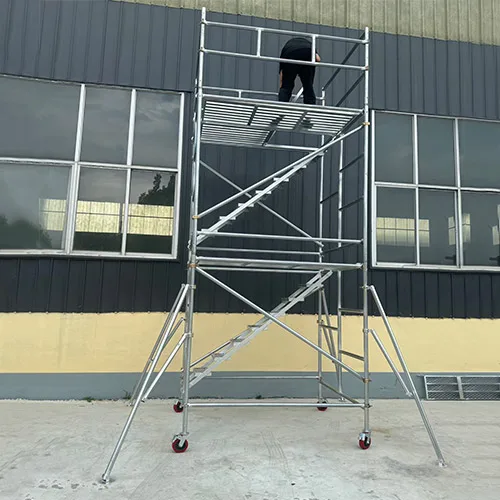
Rolling scaffolding integrates lockable casters for easy repositioning.
Key Features
- Lightweight aluminum or steel tubular frame
- Base stabilizers for safety during movement
- Ideal for indoor applications or warehouse maintenance
Industry Use
- Aircraft hangars, large indoor commercial complexes
- Electrical or plumbing installation projects
Performance Data: Rolling scaffolding with 0.5m² deck area can handle up to 300 kg load safely while maintaining mobility.
Cantilever Scaffolding: Solving Obstruction Challenges
Cantilever scaffolding is anchored at one end while the platform extends horizontally.
Structural Insights
- Anchoring is critical to prevent tilting or collapse
- Typically used when ground-level support is not feasible
Use Cases
- Bridge construction
- Elevated walkways
- Industrial pipe and conduit maintenance
Engineering Standard Reference: OSHA 1926.451(c) for cantilever scaffold design.
Steel Frame Scaffolding: Heavy-Duty Industrial Use
Prefabricated steel frames ensure stability and rapid assembly.
Technical Highlights
- Load capacity: up to 900 kg/m²
- High corrosion resistance with galvanization or powder coating
- Modular sections allow height flexibility for tall structures
Application Scope
- Industrial plants and power stations
- Large commercial projects
- Mining site operations
Case Example: A 2025 Dubai Metro expansion project employed steel frame scaffolding for station construction, reducing installation time by 20% compared to traditional wooden frame scaffolds.
Comparative Analysis: Types of Scaffolding
| Type | Load Capacity | Mobility | Best Application | Safety Level |
|---|---|---|---|---|
| Supported | High | Low | Building work | High |
| Suspended | Medium | High | High-rise maintenance | Medium-High |
| Rolling | Medium | Very High | Indoor projects | Medium |
| Cantilever | Medium | Low | Bridge & industrial structures | Medium |
| Steel Frame | Very High | Low | Industrial & heavy-duty projects | Very High |
Types of Scaffolding Selection Guide

Load and Weight Requirements
Selection depends on expected personnel and material weight. For heavy material handling, steel frame systems are preferred.
Environmental and Site Conditions
- Soft or uneven ground favors supported scaffolding with base plates and mud sills
- High-rise façades or water-adjacent sites may require suspended scaffolding
Project Duration
Temporary, short-term projects benefit from rolling scaffolds for speed, whereas long-term construction projects utilize fixed steel or supported scaffolds.
Regulatory Compliance
Scaffolding must meet:
- OSHA 1926.451 (USA)
- EN 12811-1:2022 (Europe)
- GB/T 51250-2017 (China)
Compliance ensures worker safety and legal adherence.
Safety Engineering and Risk Management
Common Failure Modes
- Platform collapse due to overloading
- Anchor failure in suspended systems
- Base instability in rolling scaffolds
Preventive Measures
- Regular inspection and maintenance
- Correct load assignment and signage
- Use of guardrails, toe boards, and harness systems
Case Reference
A white paper by the International Association of Scaffolding Contractors (IASC, 2024) highlights that proper guardrail and base plate installation reduces scaffolding accidents by over 60% in urban construction projects.
Lifecycle Cost and Efficiency
Installation Time
- Supported: 6-8 hours per module
- Rolling: 2-3 hours per platform
- Steel frame: 5-7 hours per section
Maintenance Cost
Long-term durability of steel frame scaffolding reduces total project lifecycle cost by up to 25% compared to temporary wooden scaffolds.
Efficiency Indicators
- Modular assembly reduces downtime
- Lightweight scaffolds allow fewer labor hours
- Standardized components improve safety compliance
Advanced Trends in Scaffolding
Smart Scaffold Systems
Integration of sensors to monitor:
- Load distribution
- Tilt or movement
- Real-time safety alerts
Low-Carbon and Recyclable Materials
- Aluminum and steel recycling reduces CO₂ footprint
- Prefabricated modular systems minimize construction waste
Global Market Insights
According to a 2026 McKinsey Infrastructure Report:
- Asia-Pacific urban projects drive 45% of global scaffolding demand
- Smart scaffolding adoption expected to grow by 15% CAGR
Case Study Insights
Urban High-Rise Maintenance
- Location: Singapore CBD
- Scaffold Type: Suspended
- Outcome: 12% faster façade maintenance, zero worker accidents over 2 years
Bridge Reconstruction Project
- Location: Germany
- Scaffold Type: Cantilever
- Outcome: Enabled safe access over waterways, reducing labor hazards by 30%
Large Industrial Plant
- Location: Saudi Arabia
- Scaffold Type: Steel Frame
- Outcome: Modular steel scaffolding reduced total installation time by 20%, ensuring schedule compliance for 2025 refinery expansion.
Conclusion
Understanding the types of scaffolding is essential for safe, efficient, and cost-effective construction planning. Each system—supported, suspended, rolling, cantilever, and steel frame—offers unique engineering advantages suited for specific project requirements. By integrating modern safety standards, smart sensor technology, and lifecycle cost considerations, construction managers can enhance project efficiency while reducing risk and compliance issues.
Proper selection, installation, and maintenance of scaffolding not only ensures worker safety but also contributes to sustainable, efficient, and high-quality construction outcomes across residential, commercial, and industrial projects worldwide.
FAQ
Q1: What are the most commonly used types of scaffolding?
Supported, suspended, rolling, cantilever, and steel frame scaffolding are widely used.
Q2: Which scaffolding type is safest for high-rise construction?
Suspended scaffolding with hydraulic lifts and secure anchors is optimal for tall buildings.
Q3: Can scaffolding be reused across multiple projects?
Yes, modular steel frames and rolling scaffolds are designed for repeated use with minimal modification.
Q4: How is load capacity determined?
Load capacity depends on material strength, cross-sectional geometry, and intended use. Compliance with OSHA, EN, or GB standards ensures safety.
Q5: How do I choose between supported and cantilever scaffolding?
Consider site conditions: unsupported ground areas favor cantilever scaffolds, whereas open ground allows supported scaffolds for higher efficiency.
Thank you for reading! We hope our insights help you work safely and efficiently with frame scaffolds and other construction equipment. For more updates, tips, and discussions, connect with us on Facebook. Join our community to stay informed, share experiences, and engage with fellow professionals in the scaffolding industry.