Table of Contents
Introduction

Caster brakes are essential components in mobile equipment, designed to control movement and ensure stability when needed. From industrial carts and medical equipment to mobile scaffolding and warehouse systems, caster brakes play a critical role in safety and operational efficiency.
In many real-world applications, uncontrolled movement can lead to equipment damage or workplace accidents. According to safety studies in material handling and industrial operations, mobility-related incidents are often linked to inadequate braking systems. This highlights the importance of choosing the right type of caster wheel brakes for your equipment.
What Are Caster Brakes and How Do They Work?
Caster wheel brakes are mechanisms integrated into caster wheels to stop motion or prevent rotation. Depending on the design, they can lock the wheel, the swivel mechanism, or both.
When engaged, the brake applies pressure to the wheel or internal mechanism, creating resistance that stops movement. In advanced designs, dual locking systems ensure both the wheel and swivel are secured simultaneously, providing maximum stability.
This functionality is especially important in applications where precision positioning and safety are critical.
Why Caster Brakes Are Important for Safety and Stability
The primary purpose of caster wheel brakes is to prevent unintended movement. This is particularly important in environments where equipment must remain stationary during operation.
Caster brakes contribute to:
- Improved workplace safety
- Enhanced equipment control
- Reduced risk of accidents
- Better load stability
Industry data suggests that proper use of locking mechanisms can significantly reduce movement-related hazards, especially in environments with heavy loads or frequent repositioning.
Main Types of Caster Brakes
Side Lock Brakes
Side lock brakes are one of the most common types. They are mounted on the side of the caster and engage directly with the wheel to stop rotation.
Advantages include:
- Simple design
- Easy operation
- Cost-effective solution
However, they only lock the wheel and do not prevent swivel movement, which can limit stability.
Total Lock Brakes
Total lock brakes provide a higher level of safety by locking both the wheel and the swivel mechanism.
This means:
- The wheel cannot rotate
- The caster cannot swivel
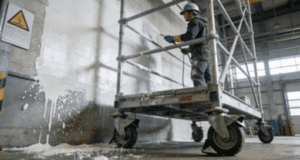
This type is widely used in applications where complete immobilization is required, such as medical equipment and mobile scaffolding.
Directional Lock Brakes
Directional lock brakes restrict the swivel movement of the caster while allowing the wheel to roll in a straight line.
They are useful for:
- Long-distance movement
- Maintaining straight travel paths
- Improving maneuverability control
This type is often used in carts and transport systems.
Top Lock Brakes
Top lock brakes are operated from the top of the caster, making them easier to access in certain equipment designs.
They provide:
- Convenient operation
- Efficient braking performance
These are commonly used in environments where quick engagement is required.
Central Locking Systems
Central locking systems allow multiple caster wheel brakes to be controlled simultaneously through a single mechanism.
Benefits include:
- Increased efficiency
- Improved safety coordination
- Faster operation
These systems are often used in specialized equipment where synchronized locking is necessary.
Caster Brakes Comparison Table
| Brake Type | Locks Wheel | Locks Swivel | Best Use Case | Key Advantage |
|---|---|---|---|---|
| Side Lock Brake | Yes | No | General equipment | Simple and affordable |
| Total Lock Brake | Yes | Yes | High safety applications | Maximum stability |
| Directional Lock | No | Yes | Controlled movement | Better maneuverability |
| Top Lock Brake | Yes | Optional | Easy access designs | Convenient operation |
| Central Locking | Yes | Yes | Complex systems | Multi-wheel control |
This comparison helps you quickly identify which brake type aligns with your operational needs.
Materials and Design Considerations
The effectiveness of caster wheel brakes is influenced by both material and design.
Common materials include:
- Steel for durability and strength
- Aluminum for lightweight performance
- High-quality polymers for smooth operation
The brake mechanism must be compatible with the wheel material to ensure consistent performance. For example, polyurethane wheels often require specific brake designs for optimal grip.
Load Capacity and Performance Factors
Load capacity is a critical factor when selecting caster brakes. The braking system must be capable of holding the full load without slipping.
Factors to consider include:
- Total equipment weight
- Distribution of load across casters
- Surface conditions
Operating caster brakes near their maximum capacity can reduce performance and lifespan, so a safety margin is recommended.
How to Choose the Right Caster Brakes
Choosing the right caster brakes depends on your specific application.
For heavy-duty environments, total lock brakes provide the highest level of safety. For applications requiring controlled movement, directional locks are more suitable.
You should also consider:
- Frequency of movement
- Working environment
- Required level of stability
Selecting the right brake type ensures both safety and efficiency.
Common Applications of Caster Brakes
Caster brakes are used across a wide range of industries and equipment.
Typical applications include:
- Mobile scaffolding systems
- Industrial carts and trolleys
- Medical equipment
- Warehouse transport systems
Their versatility makes them essential in any setup where controlled mobility is required.
Common Mistakes to Avoid

One common mistake is choosing a brake type without considering the actual working conditions. Another issue is underestimating load requirements.
Failing to maintain or inspect caster brakes regularly can also lead to performance issues.
Proper selection and maintenance are key to ensuring long-term reliability.
Conclusion
Caster brakes are more than just accessories. They are critical safety components that directly impact equipment performance and workplace safety.
By understanding the different types of caster brakes and their applications, you can select the most suitable solution for your needs. Whether you prioritize stability, control, or convenience, the right braking system will enhance both safety and efficiency in your operations.
FAQ
What are caster brakes and why are they important?
Caster brakes are mechanisms attached to caster wheels that stop movement or restrict rotation. They are important because they help keep equipment stable during use, reduce the risk of accidental movement, and improve overall safety in environments like construction, warehouses, and medical facilities.
What is the difference between total lock and side lock caster brakes?
A total lock caster brake locks both the wheel and the swivel, providing maximum stability. A side lock brake only stops the wheel from rotating but allows the caster to swivel. Total lock systems are safer for stationary equipment, while side locks are more basic and cost-effective.
How do I choose the right caster brakes for my equipment?
You should consider load capacity, working environment, frequency of movement, and safety requirements. For heavy-duty or high-risk applications, total lock brakes are recommended. For lighter or less critical use, simpler brake types may be sufficient.
Are caster brakes suitable for all types of surfaces?
Caster brakes can be used on most surfaces, but performance depends on wheel material and floor condition. Smooth, flat surfaces provide the best braking efficiency, while uneven or slippery surfaces may reduce effectiveness and require specialized wheel designs.
How often should caster brakes be inspected and maintained?
Caster brakes should be inspected regularly, especially in high-use environments. Checks should include wear, brake function, and mounting stability. Routine maintenance helps prevent failure, ensures consistent performance, and extends the lifespan of the equipment.
Need Help Choosing the Right Caster Brakes?
If you’re unsure which caster brake system is best for your equipment or application, our experts are here to help. Contact us today for a personalized consultation, and ensure your mobility system is safe, stable, and built for reliable performance. Don’t risk unwanted movement—get in touch now to improve safety and control in your operations!